
East Africa offers a diverse and flavorful culinary landscape, influenced by indigenous ingredients, trade routes, and various cultural interactions. Here’s a guide to some traditional African foods you absolutely must try when visiting the region:
Traditional African Food, Staples & Accompaniments

- Ugali (Kenya, Tanzania, Uganda, Rwanda): This is arguably the most fundamental staple food in East Africa. It’s a stiff porridge made from maize (corn) flour, cooked with water to a dough-like consistency. It’s typically unseasoned and acts as a neutral base, scooped up with your hand to eat with stews, vegetables, or meat. You’ll find variations made from millet or sorghum flour as well.
- Chapati (Regional): Influenced by Indian cuisine, chapati is a flaky, layered unleavened flatbread. It’s incredibly versatile and can be enjoyed with almost any savory dish, from stews and curries to roasted meats. It’s also a popular breakfast item, often dipped in tea.
- Wali na Maharage (Rice and Beans) (Tanzania): A simple yet incredibly popular and comforting dish, especially in Tanzania. “Wali” means rice and “maharage” means beans. The rice is often cooked in coconut milk, giving it a subtle sweetness, and the beans are usually kidney beans, stewed with onions, tomatoes, and spices.
- Sukuma Wiki (Kenya, Tanzania): Translating to “stretch the week” in Swahili, this dish is made from sautéed collard greens or kale, often cooked with onions, tomatoes, and various spices. It’s a healthy and common side dish, frequently paired with Ugali.
- Kachumbari (Kenya, Tanzania): A fresh, vibrant salad made from finely chopped tomatoes, onions, and chili peppers, often dressed with lime juice or vinegar. Some variations include avocado and cucumber. It provides a refreshing counterpoint to rich and savory dishes like Nyama Choma.
- Injera (Ethiopia, Eritrea, also found in parts of East Africa): While strongly associated with Ethiopian cuisine, Injera is a spongy, sourdough flatbread made from teff flour. It serves as both a plate and an eating utensil, torn off in pieces to scoop up stews and other dishes.
Meat Dishes:
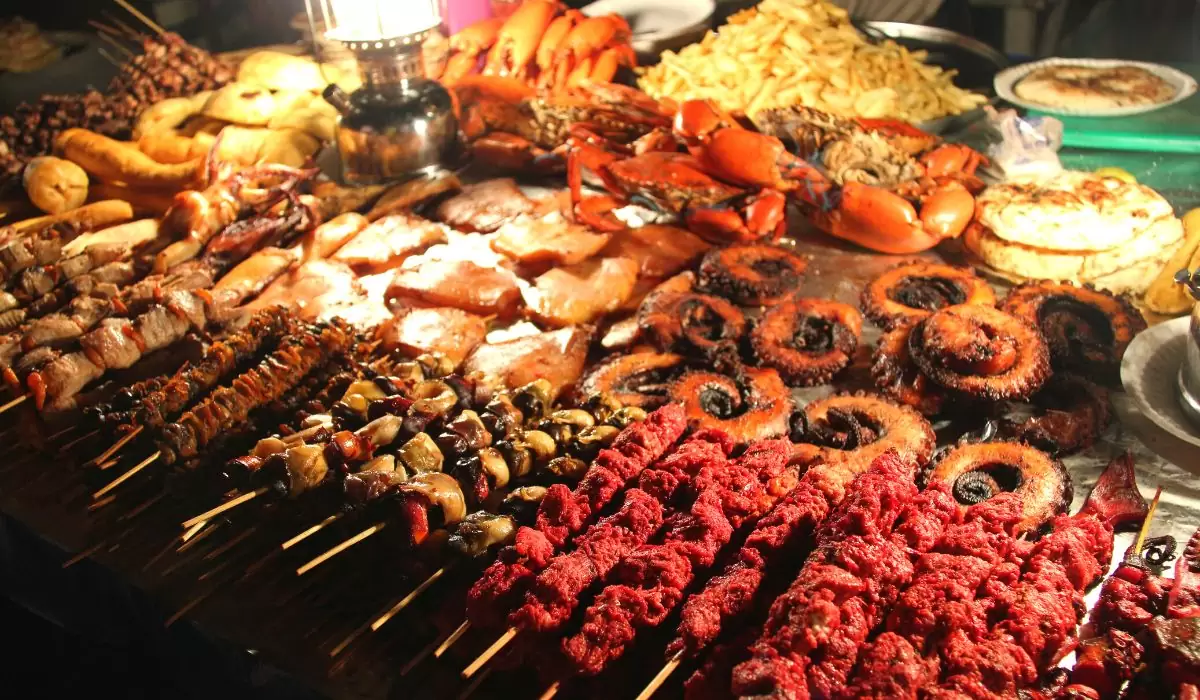
- Nyama Choma (Kenya, Tanzania): “Nyama Choma” literally means “grilled meat” in Swahili. This is a beloved barbecue dish, typically made with goat or beef, seasoned and grilled over an open flame until tender and slightly charred. It’s a communal dish, often enjoyed with friends and family, and usually served with kachumbari and ugali.
- Mishkaki / Brochettes (Regional): These are flavorful skewered meat kebabs (chicken, beef, goat, or fish) marinated with ginger, garlic, chili powder, and other spices, then grilled. They are a popular street food and snack.
- Kuku Paka (Kenya, Tanzania – Coastal): A delicious chicken curry popular along the East African coast, showcasing Indian and Arabic influences. The chicken is often char-grilled for a smoky flavor, then simmered in a rich and creamy coconut milk-based sauce with spices.
Stews & Soups:

- Matoke (Uganda): A unique and essential Ugandan dish made from steamed green bananas (plantains). The bananas are peeled, wrapped in banana leaves, and steamed until soft and mashed, often served with a groundnut (peanut) sauce or a meat stew.
- Doro Wat (Ethiopia): A classic Ethiopian spicy chicken stew, often served with Injera. It’s known for its complex flavor profile derived from berbere spice mix (a blend of chili peppers and other spices), onions, garlic, and ginger, often with hard-boiled eggs.
- Mtori (Tanzania): A filling Tanzanian stew/soup made from green bananas, potatoes, and meat. It’s known for being nutritious and is often given to pregnant women and new mothers for strength.
- Githeri (Kenya): A hearty Kenyan dish, particularly from the Kikuyu tribe, made from a mixture of boiled maize (corn) and beans. It can be cooked simply or spiced up with tomatoes, onions, and other vegetables.
- Mchemsho (Tanzania): Meaning “boiled” in Swahili, this encompasses a variety of boiled dishes featuring meat, chicken, fish, and vegetables with spices. It’s a comforting and hearty meal.
Snacks & Sweets:
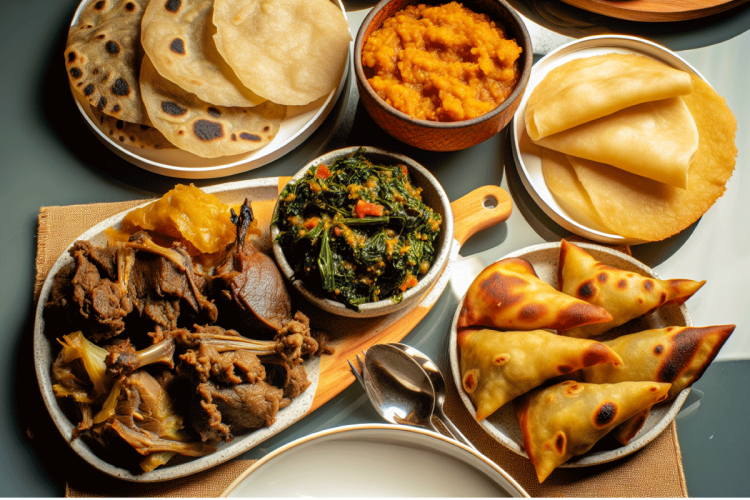
- Mandazi / Mahamri (Regional): These are sweet fried doughnuts, often triangular in shape, flavored with coconut milk and cardamom. They make for a delightful breakfast item or snack, often enjoyed with a cup of chai (tea).
- Sambusa (Samosa) (Regional): Triangular pastries filled with spiced minced meat, chicken, fish, or vegetables. A popular snack or appetizer, often served with dipping sauces.
- Zanzibar Pizza (Zanzibar, Tanzania): Not your typical Italian pizza! This is a street food marvel resembling a filled pancake, with various fillings like minced meat, vegetables, cheese, or even sweet options like chocolate and banana.
- Chips Mayai (Tanzania, Kenya): A popular street food which is essentially a French fry omelette. Chips (fries) are mixed into beaten eggs and cooked like an omelette, often served with a side of kachumbari.
- Kashata (Tanzania): A sweet treat similar to peanut brittle, made from peanuts or coconut and sugar, often with a hint of cardamom.
Where to Find Them:

You can find these traditional dishes in:
- Local Restaurants (Hotels and Restaurants): Many restaurants, from upscale hotels to local eateries, will feature these staples on their menus.
- Street Food Stalls: This is often the best way to experience authentic flavors and interact with locals. Nyama Choma, Mandazi, Sambusa, Chips Mayai, and Rolex are particularly popular street foods.
- Local Markets: Explore vibrant markets to see the fresh ingredients used in these dishes and sometimes find prepared foods.
- Home Stays/Cooking Classes: For a truly immersive experience, consider a cooking class or a home stay where you can learn to prepare these dishes yourself.
Don’t be afraid to try new things and ask locals for their recommendations. East African cuisine is a journey for the senses!
