- Home
- Lemosho Route
Lemosho Route
Lovely Route
Lemosho Route
Discover Kilimanjaro’s untouched beauty.
Price From
$1300
Overview of the Lemosho route
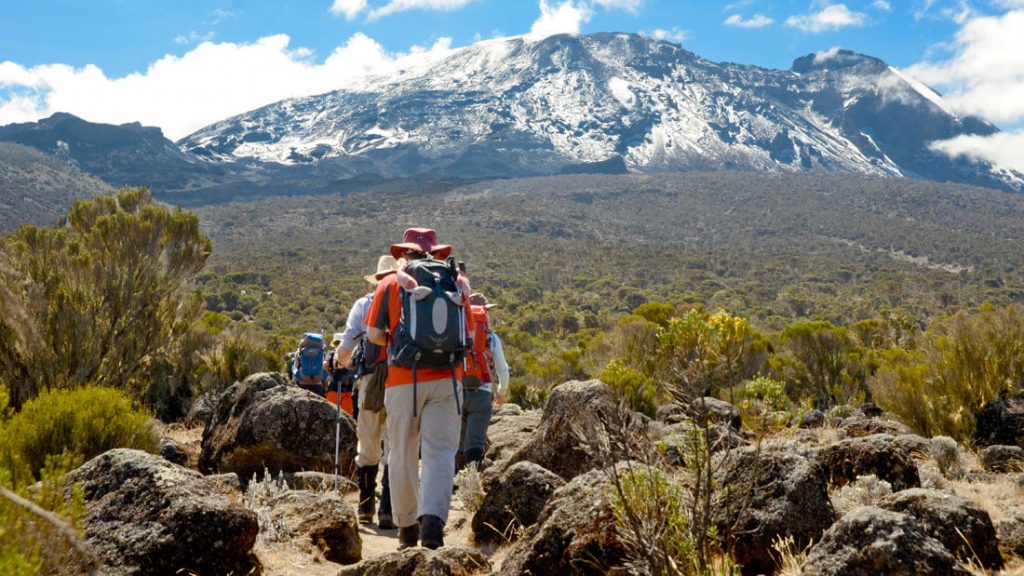
The Lemosho route is a quintessential Kilimanjaro trek, renowned for its breathtaking views, excellent acclimatization opportunities, and remarkable summit success rates. Starting from the serene western slopes of the mountain, the Lemosho route offers three flexible itineraries: 6, 7, and 8 days. One of its standout features is Cathedral Peak, standing at an impressive 3,872 meters (12,703 feet) – one of the highest points of the Shira Volcano. Here, you’ll embark on an acclimatization hike, soaking in panoramic views that showcase the very best of Kilimanjaro’s majestic landscape. The route also showcases the fascinating Dendrosenecio kilimanjari, an otherworldly plant species found only on this mountain, adding a unique touch to your adventure. Lemosho is also the path taken by Angela Vorobieva, who, at the age of 86, achieved a Guinness World Record as the oldest person to summit Kilimanjaro, a true testament to the route’s accessibility and challenge.
This trek is perfect for those looking to conquer the Roof of Africa while enjoying an unforgettable adventure that combines natural beauty with a sense of accomplishment.
Expert Recommendation
The Lemosho route stands out as our top pick for a Kilimanjaro adventure. With its spectacular scenery and gradual acclimatization profile, it is the ideal choice for those tackling the mountain for the first time.
There are three itinerary options for the Lemosho trek: 6, 7, and 8 days. Choosing the best one depends on your experience and fitness level. Here’s a quick guide to help you decide:
6-Day Itinerary: Perfect for climbers with previous high-altitude experience above 4,000 meters (13,100 feet). If you’re considering this option, we recommend completing a multi-day trek at a similar elevation within three months before your Kilimanjaro expedition.
7-Day Itinerary: This option is best suited for climbers with outdoor trekking experience but limited exposure to high altitudes. You’ll skip the tropical forest, with a vehicle transporting you directly to 3,414 meters (11,200 feet). The first two days offer relatively easy hikes with minimal elevation gain, giving you time to conserve energy for more challenging sections later on. This is our most popular Lemosho itinerary, with over 50% of our climbers choosing it for their journey. Many first-timers have successfully summited using this route.
8-Day Itinerary: Ideal for those new to hiking or who haven’t trekked in a while. The extra day at the beginning helps with acclimatization and eases you into the trekking routine, significantly improving your chances of reaching the summit. Unlike the shorter itineraries, the 8-day trek begins in a lush tropical forest, offering a more immersive and scenic experience.
No matter the route you choose, it’s important to note that Kilimanjaro demands at least an average fitness level – even for the 8-day Lemosho trek, which is often considered the easiest. For more details on fitness preparation, check out our comprehensive article on training for Kilimanjaro.
This is the route that provides a well-balanced experience, offering both stunning landscapes and a manageable challenge for all levels of adventurers.
Lemosho Route - Summit Success Rate
We’ve gathered comprehensive data on all Kilimanjaro routes over the years, and the Lemosho route stands out for its impressive summit success rates. Based on data from thousands of climbers, here are the success rates for reaching the Crater Rim and Uhuru Peak on the Lemosho 6, 7, and 8-day itineraries:
Lemosho 6-Day: Crater Rim: 95.5%, Uhuru Peak: 94.1%
Lemosho 7-Day: Crater Rim: 96.5%, Uhuru Peak: 94.9% (Highest Success Rate!)
Lemosho 8-Day: Crater Rim: 95.0%, Uhuru Peak: 91.7%
So, why does the 8-day itinerary, with a slightly lower success rate, stand out as the best choice for beginners?
The difference lies in the types of climbers it attracts. The 6-day trek is typically chosen by experienced hikers, which means their success rate is higher due to their skill set, even with the more challenging conditions. On the other hand, the 8-day trek often caters to beginners who are new to high-altitude trekking. For these climbers, even with the better acclimatization profile, the challenge remains greater, lowering their success rates.
Moreover, many climbers embark on the trek as couples. If one person decides to turn back, the other often follows, which can impact the overall success rate.
In essence, the 94.1% success rate for the Lemosho 6-day trek largely reflects the experiences of seasoned hikers, while the 91.7% success rate for the 8-day trek reflects the experiences of those new to the high-altitude adventure of Kilimanjaro.
That being said, the success rate for the 8-day trek is still incredibly high, especially when compared to other routes. For those making Kilimanjaro their first high-altitude trek, the 8-day option offers the best balance of acclimatization and challenge.
At Jambo, we pride ourselves on having some of the highest summit success rates. Our success is not just in the numbers but in the quality of our service. We prioritize the well-being of our climbers by providing excellent working conditions and competitive salaries for our guides and mountain crew, ensuring you are supported by the best. Additionally, we go the extra mile to enhance acclimatization with the use of advanced oxygen systems, conduct twice-daily medical check-ups, and equip our guides with top-notch first aid training and medical kits. All of these factors contribute to our exceptional success rates and your safe, memorable climb.
Lemosho Route Detailed Itinerary
Arrival in Tanzania
Upon arrival at Kilimanjaro International Airport (JRO), you’ll be welcomed by a professional driver-guide from Jambo International Tours. You’ll then be transferred to your hotel in Moshi for the night. This day is dedicated to rest and preparation for the climb. During this time, you’ll have a briefing with your guide, who will provide information on the trek ahead and check your gear to ensure everything is in order. This is a great opportunity to relax, acclimatize to the surroundings, and get a good night’s sleep before the adventure starts.
Day 1
Drive to Londorossi Gate and Trek to Mti Mkubwa Camp
After breakfast, your journey begins with a drive from Moshi to the Londorossi Gate (about 2.5-3 hours). After completing registration and park formalities, you’ll continue by vehicle to the Lemosho Glades trailhead. Your trek starts through the lush rainforest, offering a serene and beautiful introduction to the mountain. The hike today is relatively short, allowing you to acclimatize gently to the altitude. You’ll reach Mti Mkubwa Camp (2,750 meters/9,022 feet) by late afternoon, where you’ll enjoy a hearty dinner and rest for the night.
Trekking Time: 2.5-3 hours
Day 2
Mti Mkubwa Camp to Shira 1 Camp
Today, your trek continues through the rainforest, transitioning into the heath zone. The path is still gentle, with views of the surrounding mountains as you ascend gradually. By late afternoon, you’ll arrive at Shira 1 Camp (3,500 meters/11,483 feet), located on the Shira Plateau. This area offers stunning views of the mountain and a perfect environment for acclimatization. Tonight, you’ll rest in the camp, ready for the next day’s adventure.
Day 3
Shira 1 Camp to Shira 2 Camp
On this day, you’ll trek across the Shira Plateau, which is known for its unique landscapes and incredible views of Mount Kilimanjaro. The hike is relatively short, allowing plenty of time to enjoy the surroundings and acclimatize to the higher elevation. By the afternoon, you’ll arrive at Shira 2 Camp (3,900 meters/12,792 feet), where you’ll settle in and enjoy another evening on the mountain, appreciating the beauty of the wilderness around you.
Day 4
Shira 2 Camp to Barranco Camp
Today, you’ll continue the ascent, crossing various terrains, including rocky sections and alpine desert. After a few hours, you’ll reach the Lava Tower (4,600 meters/15,092 feet), which provides a great opportunity for further acclimatization before descending slightly to Barranco Camp (3,950 meters/12,960 feet). This “climb high, sleep low” strategy helps your body adjust to the altitude. Barranco Camp is located near the base of the Barranco Wall, which you will tackle the next day.
Day 5
Barranco Camp to Barafu Camp
This day includes the famous Barranco Wall, a steep, rocky section that requires some scrambling, but it’s a fun and rewarding challenge. After conquering the wall, you’ll continue to ascend through moorland and alpine desert terrain. The climb is steady and challenging, but the views are stunning as you approach Barafu Camp (4,640 meters/15,223 feet), which is the final resting point before your summit push. Here, you’ll rest and prepare for the summit attempt, knowing that the real challenge lies ahead.
Day 6
Summit Day – Barafu Camp to Uhuru Peak and Descent to Mweka Camp
This is the toughest day of your trek. You’ll start around midnight, making your way up to Stella Point (5,756 meters/18,882 feet) before sunrise, and then continue to the summit at Uhuru Peak (5,895 meters/19,341 feet). Reaching the summit is an incredible accomplishment and offers breathtaking views, but it’s a brief celebration before you begin the descent. You’ll retrace your steps back to Barafu Camp for a short rest before continuing down to Mweka Camp (3,100 meters/10,171 feet) for the night. The descent is long but necessary for recovery after the summit.
Departure Day
After spending the night at Mweka Camp, you’ll complete the final descent to Mweka Gate, where your Kilimanjaro adventure officially ends. At the gate, you’ll receive your summit certificate as a reward for your efforts. From there, you’ll be transferred back to Moshi for a relaxing time to celebrate your achievement before preparing for your departure.
Arrival in Tanzania
Upon arrival at Kilimanjaro International Airport, your guide will meet you and transfer you to your hotel for an overnight stay. This day is for resting, adjusting to the local time zone, and preparing for the trek. Some tours may also include an optional pre-trek briefing to go over the details of the climb.
Day 1
Lemosho Glades to Mti Mkubwa Camp
After breakfast, you’ll drive to the Lemosho Gate (2,100 meters) to complete the necessary registration. From here, you’ll begin your hike through the rainforest. The trail gradually ascends, and after about 4 to 5 hours of hiking, you’ll arrive at Mti Mkubwa Camp (2,800 meters). The camp is surrounded by lush vegetation, providing a peaceful place to rest for the night.
Day 2
Mti Mkubwa Camp to Shira 1 Camp
Today, the trail takes you out of the rainforest and into the moorland zone. As you ascend through heath and moorland vegetation, you’ll enjoy incredible views of Mount Kilimanjaro. The hike is a bit steeper, but you’ll be rewarded with stunning panoramas as you reach Shira 1 Camp (3,500 meters). After a 5 to 6-hour hike, you’ll camp at Shira 1 and have time to adjust to the altitude.
Day 3
Shira 1 Camp to Shira 2 Camp
This is a shorter trekking day, but you’ll continue to gain altitude to aid acclimatization. The trail takes you across the Shira Plateau, which provides incredible views of the mountain. After 3 to 4 hours of hiking, you’ll reach Shira 2 Camp (3,850 meters), where you’ll spend the night and enjoy panoramic views.
Day 4
Shira 2 Camp to Barranco Camp
On Day 4, the hike involves a steep ascent to Lava Tower (4,600 meters), an optional acclimatization point. After Lava Tower, you’ll descend into the Barranco Valley, where you’ll reach Barranco Camp (3,960 meters). The day is long, but the descent after Lava Tower helps your body adjust to the altitude. Barranco Camp is known for its stunning scenery and proximity to the Barranco Wall.
Day 5
Barranco Camp to Karanga Camp
This day involves the famous Barranco Wall, a challenging but non-technical climb. After summiting the wall, you’ll continue across rocky terrain and descend slightly into the Karanga Valley. The trail then climbs gently to Karanga Camp (4,035 meters). The day is relatively short but gives you plenty of time to adjust to the altitude.
Day 6
Karanga Camp to Barafu Camp
The trek on Day 6 takes you through the Karanga Valley before making a steady ascent to Barafu Camp (4,640 meters), the base camp for your summit push. The terrain becomes more barren as you gain altitude. Once at Barafu, you’ll have dinner and rest early in preparation for your summit attempt, which will begin in the early hours of the next morning.
Day 7
Barafu Camp to Summit (Uhuru Peak) and Descent to Mweka Camp
Summit day starts very early, typically around midnight or 1:00 AM. You’ll ascend in the dark, and after several hours of strenuous climbing, you’ll reach the summit of Kilimanjaro (Uhuru Peak) at 5,895 meters. After taking in the views and celebrating your accomplishment, you’ll descend back to Barafu Camp for a brief rest before continuing the descent to Mweka Camp (3,100 meters). The descent is long, but the lower altitude and easier terrain make it less strenuous than the ascent.
Arrival in Tanzania
Upon arrival at Kilimanjaro International Airport, your Jambo International Tour guide will warmly welcome you and transfer you to your hotel for a comfortable overnight stay. This day is dedicated to relaxation, giving you the perfect opportunity to adjust to the time zone and prepare for the trek ahead. If offered, you’ll also have a pre-trek briefing where your experienced guide will go over the details of the climb, safety measures, and what to expect on the journey. Enjoy this peaceful day before embarking on your adventure to the summit of Mount Kilimanjaro.
Day 1
Lemosho Glades to Mti Mkubwa Camp
After breakfast, you’ll drive to the Lemosho Gate (2,100 meters), where you’ll complete registration before beginning your trek. The trail takes you through the lush rainforest, offering a peaceful and scenic introduction to Kilimanjaro. After a 4-5 hour hike, you’ll reach Mti Mkubwa Camp (2,800 meters) for your first night on the mountain.
Day 2
Mti Mkubwa Camp to Shira 1 Camp
On Day 2, you’ll leave the rainforest and enter the moorland zone. The trail becomes steeper as you ascend through heath and moorland vegetation. After a 5-6 hour hike, you’ll reach Shira 1 Camp (3,500 meters), where you’ll camp for the night and enjoy panoramic views of the mountain and the surrounding landscape.
Day 3
Shira 1 Camp to Shira 2 Camp
The trek today takes you across the Shira Plateau, a stunning high-altitude area with incredible views. You’ll ascend gradually, allowing your body to adjust to the altitude. After a 3-4 hour hike, you’ll reach Shira 2 Camp (3,850 meters), where you can relax and soak in the views.
Day 4
Shira 2 Camp to Lava Tower and Barranco Camp
Today, you’ll hike to Lava Tower (4,600 meters), an important acclimatization point. The higher altitude helps your body adjust to the thinner air. Afterward, you’ll descend to Barranco Camp (3,960 meters) for the night. This strategy of hiking high and sleeping low is effective for acclimatization, and Barranco Camp offers stunning views of the Barranco Wall.
Day 5
Barranco Camp to Karanga Camp
On Day 5, you’ll tackle the famous Barranco Wall, a non-technical but challenging scramble. After conquering the wall, you’ll continue across rocky terrain to the Karanga Valley. The final ascent to Karanga Camp (4,035 meters) is short but steep, providing another opportunity for acclimatization.
Day 6
Karanga Camp to Barafu Camp
The trail on Day 6 takes you through the Karanga Valley to Barafu Camp (4,640 meters), your base camp for the summit attempt. The terrain becomes increasingly barren as you ascend. After reaching Barafu, you’ll have time to rest, eat, and prepare for the challenging summit day ahead.
Day 7
Barafu Camp to Summit (Uhuru Peak) and Descent to Mweka Camp
Summit day begins in the early hours of the morning. You’ll start your trek around midnight or 1:00 AM to reach the summit of Kilimanjaro (Uhuru Peak at 5,895 meters). The climb is physically demanding, but reaching the summit is a once-in-a-lifetime achievement. After celebrating, you’ll descend to Barafu Camp for a brief rest before continuing to Mweka Camp (3,100 meters) for the night. The descent is long but easier than the ascent.
Day 8
Mweka Camp to Mweka Gate and Departure
On the final day, you’ll descend from Mweka Camp to Mweka Gate (1,650 meters), where your trek officially ends. Once at the gate, you’ll sign out and receive your summit certificate. Afterward, you’ll be transferred back to your hotel to relax before your departure. You’ll be transferred to Kilimanjaro International Airport for your flight home.
Climbing Cost Includes
We provide smooth, reliable pick-up and drop-off services to and from Kilimanjaro International Airport (JRO), ensuring you arrive and depart stress-free.
Your journey begins and ends with a comfortable hotel stay, complete with cozy rooms and friendly service—perfect for relaxing before and after your adventure.
All Kilimanjaro National Park entry fees, camping charges, and rescue fees are included—no hidden costs or surprises.
Your safety and success are our top priorities. Our treks are led by experienced, licensed mountain guides backed by skilled cooks and strong, supportive porters.
Stay fueled with three hot meals per day, plus snacks and clean drinking water—designed to support your energy and recovery on the trail.
We provide high-quality tents, sleeping mats, and all necessary camping equipment, so you don’t have to worry about a thing.
Climbing Cost Excludes
International and domestic flights to and from Kilimanjaro International Airport are not included.
You’ll need to bring your own boots, layered clothing, sleeping bag, and other personal items. (Gear rentals are available on request.)
Tipping your guides, porters, and support staff is customary and highly appreciated.
Drinking water is provided during the trek, but personal beverages like sodas and alcoholic drinks are not included.
We strongly recommend purchasing travel insurance that covers emergency evacuation and high-altitude trekking.
Tanzania entry visa fees are the responsibility of the traveler. Ensure your passport and visa are in order before arrival.
Lemosho Route FAQ
Lemosho Route: 7 Days vs 8 Days – Which One is Right for You?
The 7-day version starts at a higher elevation—3,414 meters (11,200 feet)—giving you a head start on altitude exposure. The first two days involve light trekking with minimal altitude gain, allowing you to conserve energy for tougher sections ahead. While this jump-start can be efficient for some, others may find the rapid altitude change a bit demanding.
On the other hand, the 8-day itinerary begins at a lower elevation—2,100 meters (6,889 feet)—offering a gentler acclimatization process and a scenic walk through lush rainforest terrain. Though the first day covers more ground, the gradual ascent gives your body more time to adjust, which can be beneficial if you're new to high-altitude trekking.
Both options provide outstanding acclimatization profiles and are among the most picturesque and successful routes to the summit of Kilimanjaro, boasting summit success rates above 90%. Whether you’re a first-time trekker or a seasoned hiker, Lemosho offers a well-balanced challenge with incredible rewards.