- Home
- Kilimanjaro Climbing Guide
Kilimanjaro Climbing Guide
Kilimanjaro Climbing Guide
Your Ultimate Step-by-Step Handbook to Conquering Africa’s Highest Peak
Kilimanjaro Climbing Guide
Mount Kilimanjaro stands proudly at 5,895 meters (19,341 feet) above sea level, earning its title as the tallest free-standing mountain in the world and the iconic “Roof of Africa.”
This majestic peak is one of Africa’s most sought-after destinations, attracting more than 40,000 adventurers each year. Despite its impressive height, climbing Kilimanjaro doesn’t require technical mountaineering skills—just a reasonable level of fitness and a spirit of adventure.
At Jambo International Tour, we’ve prepared this comprehensive guide to help you get ready for your unforgettable Kilimanjaro journey. With years of hands-on experience guiding climbers from around the world, we take pride in offering expertly planned treks that combine safety, comfort, and authentic Tanzanian hospitality.
Popular questions about Kilimanjaro
How difficult is it to climb Kilimanjaro?
Climbing Mount Kilimanjaro is considered moderately challenging, but it’s well within reach for anyone with average physical fitness and a determined mindset. No technical climbing skills are required. With Jambo International Tour’s experienced mountain guides, a well-paced itinerary, and proper acclimatization, most people—even first-time trekkers—can successfully stand at the top of Africa.
How long does it take to climb Mount Kilimanjaro?
The duration of a Kilimanjaro climb typically ranges from 5 to 8 days, depending on the route you choose. While it’s possible to complete the trek in five days, most climbers opt for 6 to 8-day itineraries, as spending more time on the mountain allows for better acclimatization and greatly improves your chances of reaching the summit safely. For those seeking a deeper adventure, extended routes—including options with an overnight stay at the crater—can last 10 days or more.
Which route should I choose to climb Kilimanjaro?
Each route offers a unique experience. Popular options include the Lemosho Route (scenic and great for acclimatization), the Machame Route (most popular), and the Marangu Route (the only one with hut accommodations). Your ideal route depends on your fitness, experience, and preferred adventure style.
Can a Beginner Climb Mount Kilimanjaro?
Yes! Climbing Kilimanjaro is absolutely possible for beginners—even if you’ve never hiked a mountain before. The journey to the summit is more about endurance, mindset, and proper acclimatization than technical climbing skills.
At Jambo International Tour, we’ve guided many first-time trekkers to Uhuru Peak successfully. The most important factor is choosing a 7 to 8-day route, which gives your body enough time to adjust to the altitude—this significantly boosts your chance of reaching the summit safely.
We understand how overwhelming it can feel to take on such a challenge for the first time. That’s why our experienced guides are trained not only in mountain safety and high-altitude support, but also in encouraging and empowering beginners every step of the way. You don’t need to be a seasoned hiker—just be reasonably fit, follow your guide’s instructions, and trust the process.
When Is the Best Time to Climb Mount Kilimanjaro?
The ideal months to climb Kilimanjaro are from late December to early March and mid-June to late October. During these periods, the weather is generally clear and dry—perfect for trekking and enjoying panoramic views.
That said, Kilimanjaro can be climbed year-round. The rainy seasons—April to early June and November—don’t necessarily mean non-stop downpours. In fact, most rain showers occur later in the day, often leaving clear, peaceful mornings for trekking. Some climbers prefer this off-season for quieter trails and unique scenery.
At Jambo International Tour, we help you plan your climb according to your preferences—whether it’s chasing the best summit weather or seeking a more serene experience in the rainy months.
How Should I Train for a Kilimanjaro Climb?
You don’t need to be an elite athlete to climb Kilimanjaro, but having a moderate level of fitness makes the experience much more enjoyable and increases your chances of reaching the summit.
At Jambo International Tour, we recommend that climbers aim to be able to:
Run 5 km (3 miles) without too much strain
Hike 10 km (6+ miles) comfortably in a day, preferably with some elevation
The best ways to prepare include a mix of cardio and endurance training, such as:
Hiking with a backpack
Jogging or trail running
Cycling
Swimming or stair climbing
But beyond fitness, mental stamina is just as important. Training your body and your mindset will make a big difference when facing long days and high altitudes.
What Are the Dangers of Climbing Mount Kilimanjaro?
The most serious risk when climbing Kilimanjaro is Acute Mountain Sickness (AMS), caused by ascending too quickly without allowing your body time to adapt. In rare cases, it can develop into High Altitude Cerebral Edema (HACE) or Pulmonary Edema (HAPE)—both life-threatening conditions. Around ten climbers per year lose their lives on the mountain, usually due to complications from altitude.
But here’s the good news:
AMS is largely preventable with the right approach.
From our experience at Jambo International Tour, here’s how to stay safe:
Choose a 7-day (or longer) route to allow proper acclimatization
Stay hydrated and eat well throughout the trek
Climb slowly, giving your body time to adjust
Follow your guide’s advice at every stage
Most importantly, our certified mountain guides are trained in Wilderness First Response (WFR) and are fully equipped to handle emergencies, health checks, and evacuations if necessary. Your safety is our number one priority.
What to pack for Kilimanjaro?
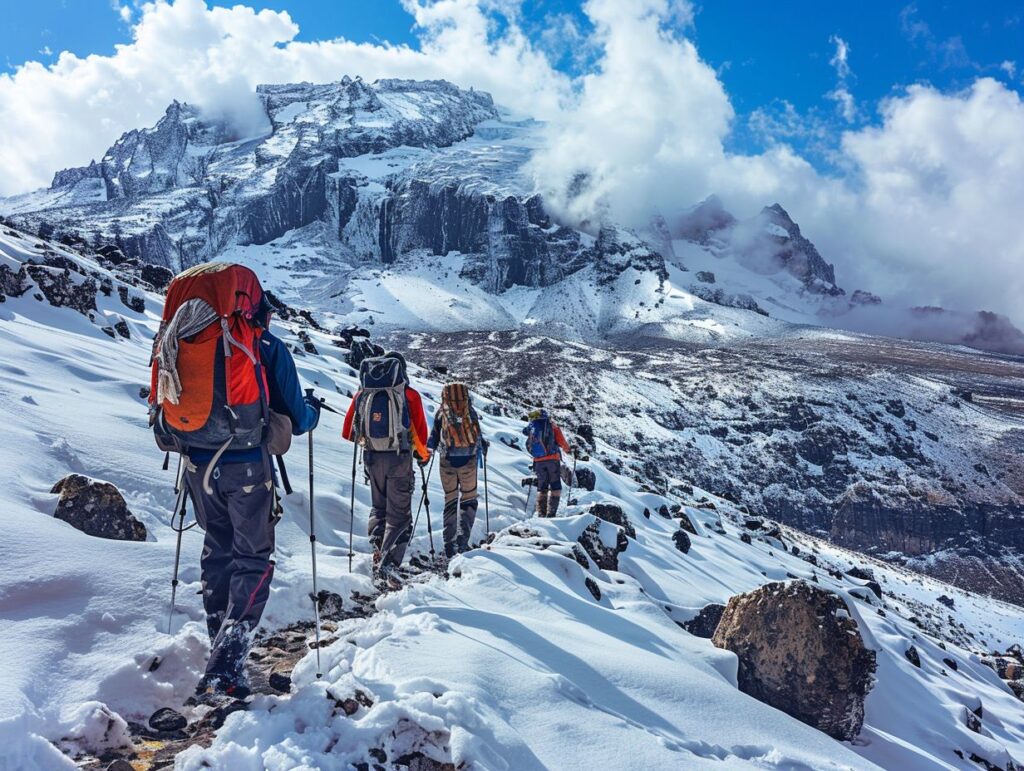
A Kilimanjaro expedition takes you through five distinct climatic zones—from lush rainforests at the base to freezing alpine deserts and Arctic-like conditions at the summit. Temperatures can swing dramatically, from +20°C (68°F) in the lower zones to -15°C (5°F) or even lower at night near the peak. Plus, the weather can shift in an instant—sunshine, wind, and rain can all happen in a single day.
To ensure your comfort, safety, and success on the mountain, packing the right gear is essential.
At Jambo International Tour, we’ve guided hundreds of climbers through these changing conditions, and here’s what we know from experience: those who come prepared with the right clothing and equipment enjoy the climb much more and have a better chance of reaching the summit.
What is high-altitude acclimatization in general?
As you begin planning your Kilimanjaro climb, you’ll often come across the term “high-altitude acclimatization.” Simply put, it refers to the natural adjustments your body makes to help you feel better and perform well as you ascend to higher elevations.
But why do some climbers feel unwell as they gain altitude?
Here’s what’s happening behind the scenes:
The higher you go, the lower the atmospheric pressure becomes. That means the oxygen molecules in the air are more spread out—each breath you take delivers less oxygen to your body than you’re used to at sea level.
Since oxygen powers vital functions like your circulatory system, brain activity, and muscle performance, this reduced supply can lead to symptoms like headaches, fatigue, dizziness, or nausea if your body hasn’t had time to adapt.
At Jambo International Tour, we place a big emphasis on acclimatization because it’s key to your success and safety on the mountain. Our itineraries are designed with gradual altitude gain, regular health checks, and “climb high, sleep low” strategies to help your body adjust naturally.
🧠 Fun Fact: Your body starts making more red blood cells and breathing more efficiently as you acclimatize—just one of the ways it adapts to the challenge of high altitudes.
Understanding acclimatization is crucial to preparing for your adventure. Let us guide you every step of the way to the summit—safely and successfully.
Allowable Oxygen Level
At sea level, the normal oxygen saturation level (sometimes called O2 saturation) in your blood typically ranges between 95% and 99%. For people living with chronic respiratory or heart conditions, these numbers may naturally sit a bit lower—around 92% to 94%.
However, once you begin ascending Mount Kilimanjaro, the air gets thinner and oxygen levels drop. This is completely normal, but it’s something we monitor closely throughout your trek.
Our Jambo International Tour mountain guides perform regular health checks, including the use of a pulse oximeter to measure your oxygen saturation. Here’s how we interpret the readings:
90%–99% – Excellent!
You’re adjusting well to the altitude. If you’re not experiencing other symptoms, you’re good to continue the climb.
80%–89% – Still within a safe range
This indicates that your body is partially acclimatized, but we’ll pay closer attention to how you’re feeling. Let your guide know right away if you’re experiencing headaches, nausea, dizziness, fatigue, or loss of appetite. These could be early signs of altitude sickness.
Always Communicate with Your Guide
Even if your symptoms feel minor, tell your guide immediately. It’s their job to protect your well-being, not just lead you to the summit. Our team is trained to recognize early warning signs and take action to prevent more serious conditions.
At Jambo International Tour, your health and safety come first—every step of the way.
The main rules for successful acclimatization
To support your acclimatization, we strongly recommend following these important practices:
🏔️ Choose a 7-Day Route or Longer
We highly encourage climbers to select a minimum of 7 days on the mountain. This gives your body the time and energy it needs to adapt properly. On a typical 7-day climb, you’ll spend 6 days ascending and 1 day descending — a balanced pace that allows for moderate trekking, ample rest, and a greater chance of reaching the summit.
Many of our most successful climbs happen on 7- and 8-day routes, which are perfect for:
First-time hikers
Recreational adventurers
Anyone looking for a less rushed, more relaxed pace
Shorter 5- or 6-day treks are best suited for those who already have recent high-altitude experience — such as climbers who’ve tackled Mt. Meru (4,566 m) beforehand.
💧 Hydrate Constantly – At Least 3-4 Liters Per Day
Your body uses much more water at high altitudes — not just for physical effort, but also to support internal changes like increased breathing and metabolism. That’s why we recommend:
Drinking 1.5 liters during your hike
Finishing the rest at camp
Taking small, frequent sips, rather than gulping
Our guides will schedule rest breaks every 25–30 minutes, using those moments to remind you: “Time to sip some water!”
🍽️ Fuel Your Body with Nutritious Food
High altitudes burn through your energy quickly. That’s why proper nutrition is key. At Jambo International Tour, our mountain chefs prepare hot, hearty, and balanced meals at every camp. Our menu includes:
Fresh fruits and vegetables
Rice, pasta, and cereals
Eggs, chicken, beef, and local specialties
Soups, snacks, and warming drinks
Even if you feel a lack of appetite, try to eat something — your body needs the fuel to recover and adapt.
🧗♂️ “Walk High, Sleep Low” – A Golden Acclimatization Rule
This proven mountaineering strategy helps your body adjust faster. You’ll hike to higher altitudes during the day, then descend slightly to sleep. Our guides integrate short acclimatization hikes into each day’s schedule to follow this pattern.
Even if you feel tired, don’t skip the acclimatization walk after reaching camp — it makes a big difference.
🐢 Take It Slow – “Pole Pole” Is the Way
On Kilimanjaro, slow is strong. You should move 2–3 times slower than your regular walking pace. This helps your body:
Spend less energy recovering from exertion
Focus more on acclimatization and oxygen efficiency
You’ll hear our guides and porters repeat a beautiful Swahili phrase: “Pole pole”, which means “slowly, slowly.” Embrace it. Those who climb slowly from the start are almost always the ones who reach Uhuru Peak (5,895 m) feeling great.
With our expert team, time-tested routes, and your commitment to these best practices, your Kilimanjaro experience will be safer, more enjoyable, and unforgettable.
