A testament to resilience and tradition, the legendary Maasai tribe stands as one of Africa’s most iconic and unmistakable nomadic peoples. Their striking red shukas and intricate beadwork are a powerful visual symbol of their deep-rooted culture and unyielding spirit. Dwelling in the vast, sweeping landscapes of the Great Rift Valley, the Maasai have courageously preserved their pastoral way of life, herding cattle and adhering to time-honored customs that have been passed down through generations. They are not merely survivors but a vibrant and enduring force, representing the fierce independence and profound heritage of the African continent.
Maasai :A Cultural Presence Rooted in Nature.
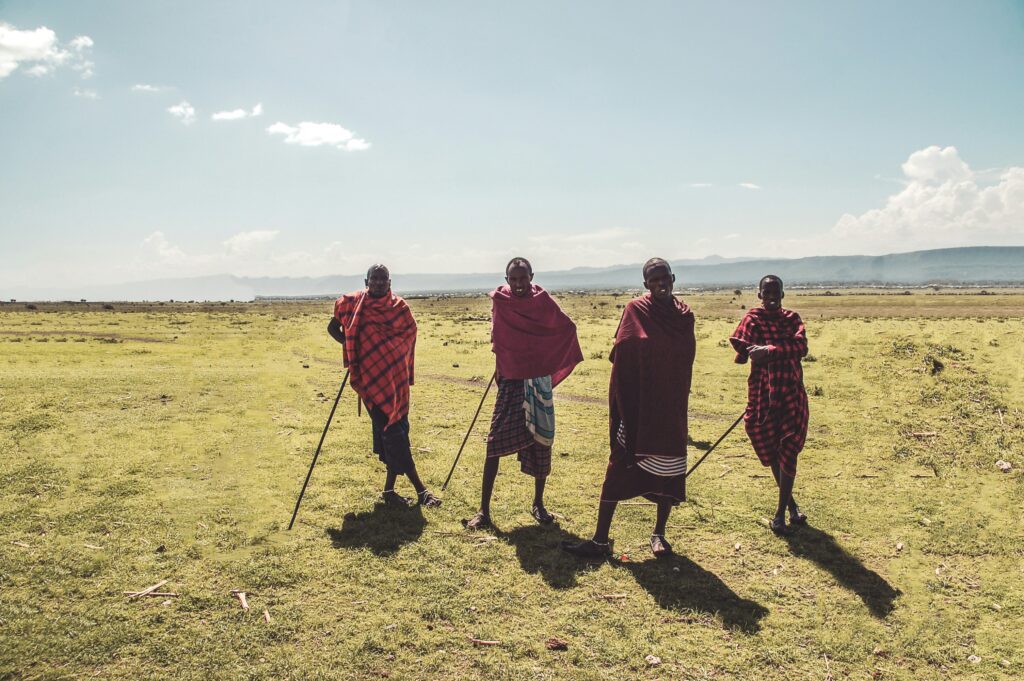
In Tanzania, Maasai communities are especially visible around the Ngorongoro Conservation Area and Serengeti National Park, while in Kenya, the famous Masai Mara Reserve is named in their honor. Their proximity to these world-renowned parks allows travelers a rare opportunity to experience both natural wonders and rich cultural heritage in a single journey.
Cattle are at the heart of traditional Maasai life. More than just a source of food, they represent wealth, social status, and livelihood. The Maasai diet is primarily based on products from their herds—especially meat and milk. Sheep and goats are also kept, but are typically reserved for rituals and special occasions. In Maasai culture, a man’s success is often measured by how many cattle he owns and how many children he fathers—two aspects that are closely linked.
Distinctive Dress and Beadwork.

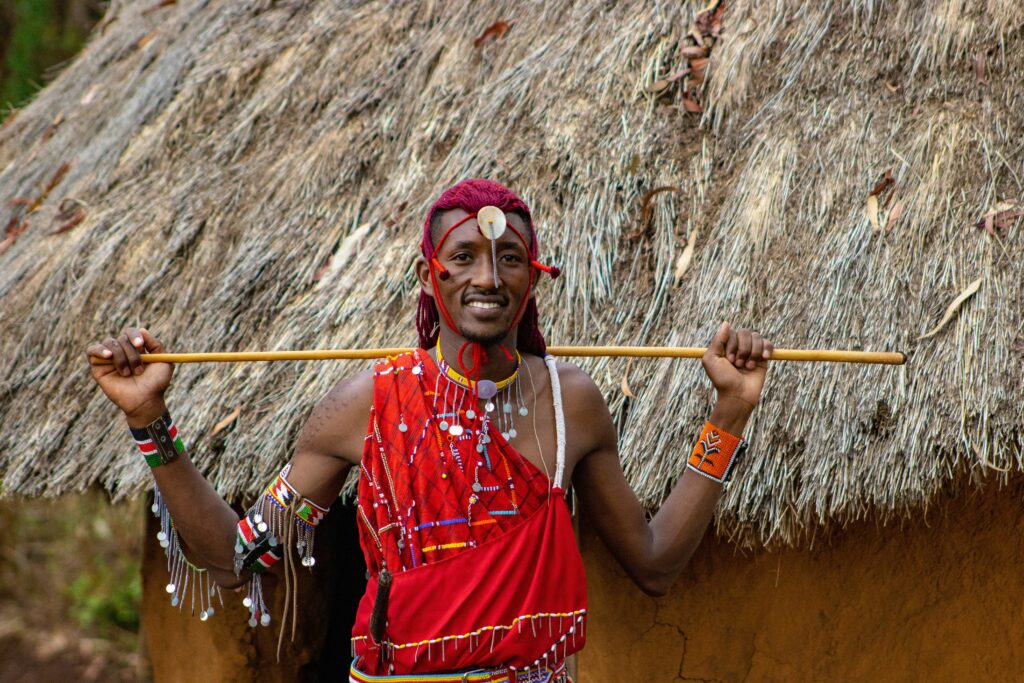
The Maasai are easily recognized by their vibrant clothing. Men and women wear robes in striking red, blue, or black hues, along with sandals. The women are particularly known for their beautiful beadwork, spending hours crafting intricate jewelry from beads, bone, and wood. These adornments are not just decorative—they express identity, age, and marital status.
A Society Led by Elders and Warriors.
Maasai society is deeply patriarchal, with important decisions made by male elders. Another vital group within the community is the warrior class, or morans. These young men go through rigorous rites of passage to become protectors of the community. As warriors, they enjoy certain privileges, including the right to grow long hair and marry.
Maasai society is deeply patriarchal, with important decisions made by male elders. Another vital group within the community is the warrior class, or morans. These young men go through rigorous rites of passage to become protectors of the community. As warriors, they enjoy certain privileges, including the right to grow long hair and marry.
Spiritual Beliefs and the Role of the Laibon.
The Maasai believe in one God, known as Engai (or Enkai), who embodies both kindness and vengeance a balance that reflects the dual nature of life itself. Spiritual matters are overseen by a Laibon, a respected figure who conducts rituals, offers blessings, and provides guidance. However, the Laibon does not hold political power; that remains with the elders.
Preserving Identity in a Changing World.
Despite the pressures of modernization, the Maasai have remained resilient in preserving their customs and way of life. Their presence enriches the cultural landscape of East Africa and provides visitors with an authentic glimpse into one of the continent’s most enduring traditions. Whether you’re on safari or visiting a local village, the Maasai offer more than just a cultural experience—they represent the living heartbeat of East Africa.
Maasai Warrior Culture: Courage & Brotherhood.

Among the most admired aspects of Maasai society is the revered warrior class, known as the morans. Becoming a warrior is not just a role—it is a rite of passage, a spiritual transformation, and a lifetime bond to the land and the community. From a young age, boys undergo traditional ceremonies that mark their entry into warriorhood, including circumcision, isolation, and training in survival, discipline, and bravery.
Warriors are the defenders of Maasai land, livestock, and honor. They are also the keepers of tribal pride and ancestral values. Dressed in bold red shukas and adorned with spears, jewelry, and intricate hairstyles, they carry themselves with grace and fearless strength. Their appearance alone commands respect.
During this stage of life, morans live together in specially designated camps, where they build unbreakable brotherhoods and learn what it truly means to serve their people. Though they once hunted lions as a rite of bravery (a practice now discouraged to protect wildlife), the modern moran still plays a key role in protecting the community and preserving cultural identity.
Modern Maasai: Preserving Tradition in a Changing World.
While modern life continues to evolve around them, the Maasai have found a remarkable balance between tradition and progress. Many still live in bomas (traditional homesteads), herd cattle, and follow ancestral customs. At the same time, some Maasai have embraced education, entrepreneurship, and technology—without letting go of their cultural roots. You’ll still see Maasai dressed in traditional robes, practicing age-old ceremonies, and speaking their native Maa language, proudly preserving their identity for future generations.
Visiting the Maasai Tribe.
Though some Maasai communities they well come you to their villages between Ngorongoro and Serengeti welcome respectful visitors. Here, you can watch traditional dances, explore daily village life, and meet community members. Many visits also offer the chance to buy handmade jewelry—supporting local artisans and taking home a piece of Maasai culture.
