
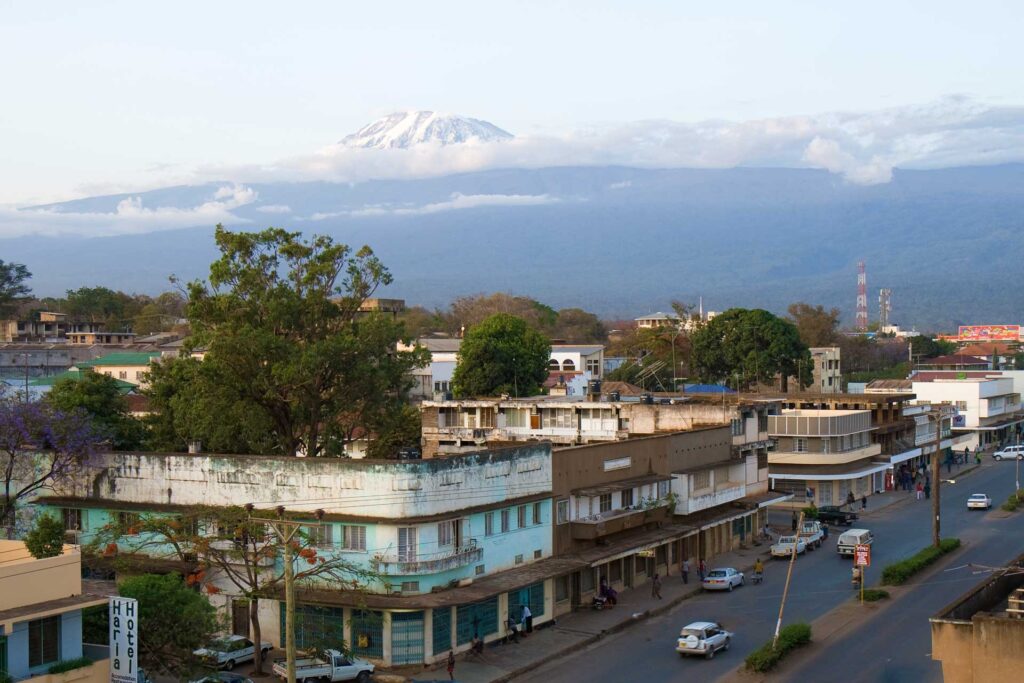

Moshi Town-the Capital of Kilimanjaro Region. nestled at the foot of Mount Kilimanjaro in northeastern Tanzania, is the bustling capital of the Kilimanjaro Region. Known for its breathtaking views of Africa’s highest peak, Moshi serves as a major gateway for climbers and adventurers heading to the mountain. Beyond tourism, the town is a regional hub for commerce, agriculture—especially coffee production—and local culture. With its blend of urban convenience and natural beauty, Moshi offers a unique mix of traditional charm and modern growth, making it one of Tanzania’s most attractive and strategically important towns.
Background of Moshi
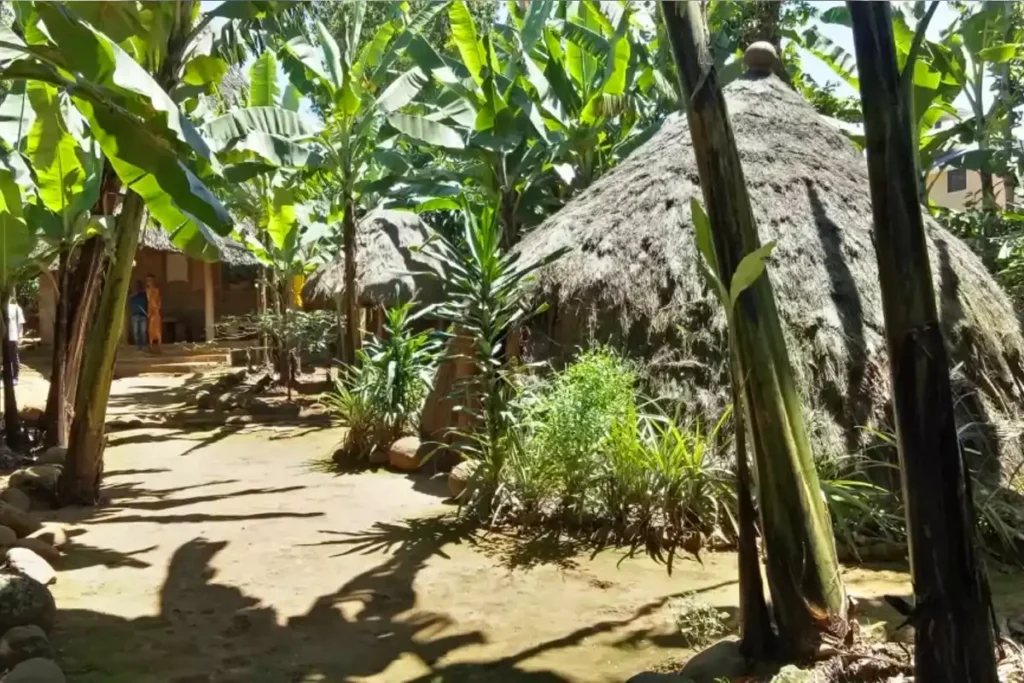
Historically, Moshi gained prominence during the German colonial era, initially established as a military encampment in the late 19th century. The extension of the railway line in 1912 transformed it into a significant trading post, especially for the coffee grown on the fertile volcanic slopes surrounding the town. Following German rule, the British took over, and Moshi continued to grow, attracting a diverse population, including a notable Indian migrant community that contributed to its bustling marketplace and small industries. Moshi was officially designated a town in 1956. While coffee trade has declined, other industries such as sugar production (TPC Limited), brewing (Serengeti Breweries), and beverage bottling (Bonite Bottlers – Coca-Cola) have become important. Tourism remains a vital sector, drawing numerous visitors annually. As the capital of the Kilimanjaro Region, Moshi is also an administrative and educational center, hosting institutions like Moshi Co-operative University and Mwenge Catholic University. The name “Moshi” in Swahili means “smoke,” referring to the mist often emanating from Mount Kilimanjaro. Old Moshi, located about 10 km north of the current town, is the original site established by the Germans and holds historical significance as the center of the Chagga leadership under Mangi Meli.
Weather in Moshi, Tanzania
Rainy Seasons:
- Long Rains (Masika): The most significant rainfall occurs from mid-March to May. During this period, you can expect frequent and often heavy afternoon downpours. The humidity is generally high.
- Short Rains (Vuli): A shorter period of rain occurs from November to mid-January (sometimes extending into February). These rains are typically less intense and shorter in duration compared to the long rains.
Dry Seasons:
- Long Dry Season: This extends from June to October. These months are generally cooler and experience clear, sunny skies, especially in the mornings and evenings. This period is often considered the best time for climbing Mount Kilimanjaro and wildlife safaris in the nearby northern parks.
- Short Dry Season: In the northern regions, including Moshi, there is often a drier period in January and February between the short and long rainy seasons. While there’s still a higher chance of occasional showers compared to the main dry season, these months are generally warmer and drier than the main rainy periods.
Temperature:
- Moshi enjoys warm temperatures year-round due to its proximity to the equator.
- Warmest months: Generally, January, February, and March are the warmest, with average daily highs reaching the upper 20s to around 30°C (low to mid-80s °F).
- Coolest months: June, July, and August are the relatively cooler months, with average daily highs in the low to mid-20s °C (mid to upper 70s °F).
- Nighttime temperatures are generally mild, ranging from the mid-teens to low 20s °C (60s to low 70s °F). Higher altitudes on Mount Kilimanjaro, of course, experience significantly colder temperatures.
Other Factors:
- Humidity: Humidity levels tend to be higher during the rainy seasons.
- Sunshine: Moshi receives a good amount of sunshine throughout the year, with the sunniest months often coinciding with the dry seasons.
- Wind: Wind speeds are generally moderate, with some variation throughout the year.
Old Moshi
Old Moshi is the original site of Moshi town, established by German colonialists in 1893, about 10 km north of the current town. It was the historical center of the Chagga people and the seat of power for Mangi Meli, a significant Chagga chief who resisted German colonial rule. Today, visitors can explore remnants of the German colonial era, such as the old German military station (now Kolila Secondary School) and colonial-era cemeteries. Old Moshi offers a glimpse into the traditional Chagga culture with its bustling markets and local life. It provides panoramic views of Moshi town and Mount Kilimanjaro. Cultural tours often include visits to traditional Chagga homes, coffee farms to learn about the coffee-making process, and historical sites related to the Chagga chiefdoms.
The Map of Moshi, Tanzania
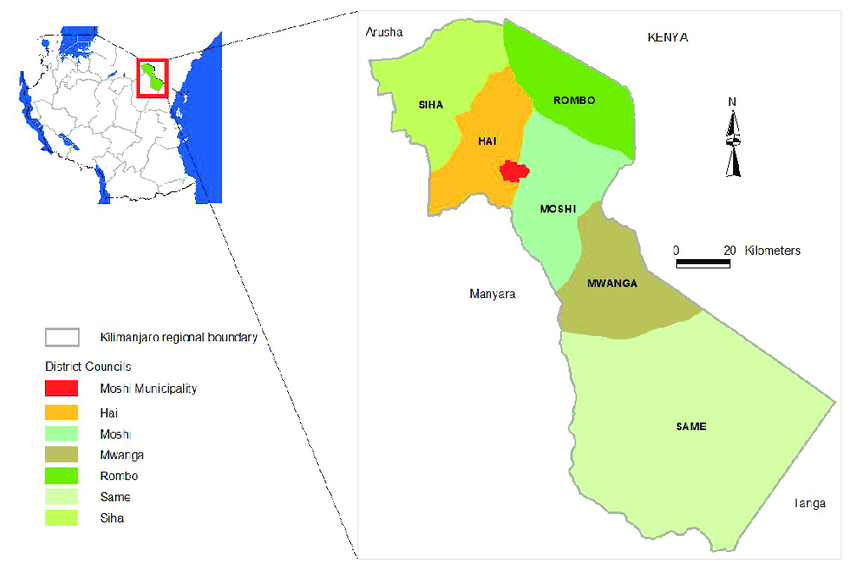
Moshi is located in the Kilimanjaro Region of northeastern Tanzania. It is situated on the lower slopes of Mount Kilimanjaro. Moshi Urban District covers an area of approximately 63 square kilometers. Moshi District, which surrounds Moshi Urban District on three sides, is much larger, covering about 1,300 square kilometers. You can find various online maps that detail the layout of Moshi town and the surrounding region.
What Time is it Now in Moshi?
The general time in Moshi, Tanzania, aligns with East Africa Time (EAT), which is GMT+3. This means that Moshi is three hours ahead of Greenwich Mean Time.
Therefore, whenever you are trying to figure out the time in Moshi, you can take the current time in GMT and add three hours. For example, if it is 9:00 AM GMT, it would be 12:00 PM in Moshi.
Since the current date and time is Wednesday, April 30, 2025, at 11:07 AM EAT, this confirms that Moshi operates on the GMT+3 time zone. You can generally expect this to be the case year-round as Tanzania does not observe daylight saving time.
Moshi Airport
Moshi Airport is a small domestic airport located on the western edge of Moshi Town. It plays a vital role in connecting this mountainous region to other parts of Tanzania. While it should not be confused with Kilimanjaro International Airport (JRO)—which lies about 40 kilometers to the west and handles most international traffic—Moshi Airport serves primarily local flights and is used by regional airlines and charter operators.
The airport is conveniently located, just around 10 minutes by car from Brubru Lodge and roughly 30 minutes from Aishi Machame Hotel. Its accessibility makes it an ideal choice for travelers seeking quick domestic transfers without the longer journey to the international terminal.
Flights from Moshi Airport typically serve destinations such as Dar es Salaam, Arusha, Tanga, Mwanza, and other key Tanzanian cities. Although it is a smaller facility, Moshi Airport is strategically important due to its role in supporting tourism, local business travel, and emergency services.
One of the airport’s most unique functions is its connection to Mount Kilimanjaro’s emergency and rescue infrastructure. It serves as the base for the only helicopter rescue and transportation service available on the mountain. In case of emergencies or for those choosing to descend from the higher camps of Kilimanjaro by air, Moshi Airport is the designated landing point. This makes it a critical resource not only for logistics and tourism but also for safety on Africa’s highest peak.
Tours Starting from Moshi
Moshi serves as a gateway to some of Tanzania’s most iconic natural and cultural attractions. Whether you’re looking for high-altitude adventure, immersive wildlife safaris, or rich cultural experiences, Moshi offers a wide range of tour options that cater to every type of traveler.
Climb Mount Kilimanjaro

Climbing Mount Kilimanjaro is an unforgettable adventure and one of the top reasons travelers come to Moshi. As Africa’s highest mountain, Kilimanjaro rises to 5,895 meters (19,341 feet) above sea level. The trek offers a rare combination of physical challenge and breathtaking scenery, taking climbers through multiple ecological zones—from tropical rainforest to alpine desert, and finally to the glacial summit at Uhuru Peak.
There are several trekking routes to choose from, each with its own unique landscape and difficulty level. Treks range from 5 to 9 days, and while the climb does not require technical mountaineering skills, it demands good physical fitness and proper acclimatization. Reaching the summit is a rewarding achievement, offering expansive views across the plains of Tanzania and into neighboring Kenya.
On the way, trekkers encounter diverse flora and fauna, pass through ancient forests filled with colobus monkeys, and experience the thrill of camping on the slopes of a dormant volcano. The journey not only offers a physical challenge but also a deep connection to nature and local culture.
Wildlife Safaris
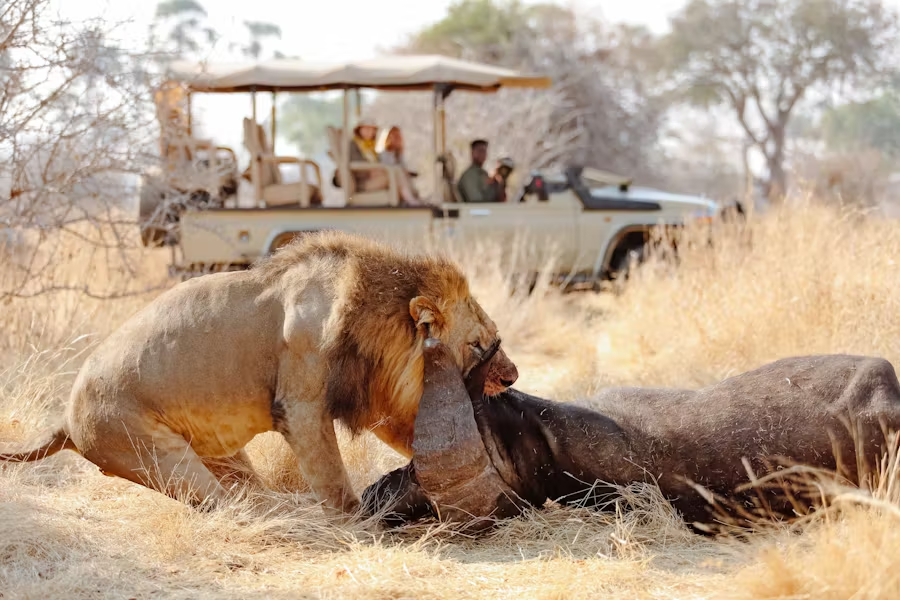
Tanzania is world-renowned for its extraordinary wildlife and vast protected areas, making it one of the top safari destinations in Africa. The country’s Northern Safari Circuit, which is accessible from Moshi, features some of the most celebrated wildlife parks and conservation areas on the continent.
- Serengeti National Park is famous for the Great Migration, where millions of wildebeests and zebras move in search of fresh grazing, accompanied by predators such as lions, cheetahs, and crocodiles.
- Ngorongoro Conservation Area, a UNESCO World Heritage Site, is home to the Ngorongoro Crater—the world’s largest intact volcanic caldera. This natural enclosure harbors dense populations of animals including elephants, rhinos, buffalo, and big cats, all viewable in a single game drive.
- Other parks like Tarangire and Lake Manyara offer additional opportunities to see large herds of elephants, tree-climbing lions, flamingos, and many other species.
These safaris range from one-day excursions to multi-day overland adventures, often including visits to Maasai villages and scenic viewpoints along the way.
Materuni Waterfalls and Coffee Plantation Tour

A visit to Materuni is a refreshing escape into the foothills of Mount Kilimanjaro, located just a short drive from Moshi. The tour typically begins with a scenic walk through lush vegetation and small Chagga villages, leading to Materuni Waterfalls, which cascade from a height of over 70 meters. The hike is gentle and ideal for most fitness levels, offering panoramic views of the surrounding mountains and valleys.
After visiting the falls, travelers are welcomed into a traditional Chagga household to experience the region’s famed coffee culture. Here, you’ll learn about the full process of coffee production—from picking ripe beans to roasting and grinding—using age-old methods passed down through generations. The experience often ends with a shared cup of freshly brewed, locally grown Arabica coffee.
This day trip offers both natural beauty and cultural immersion, making it a favorite among visitors looking to combine relaxation, nature, and local tradition.
Chemka Hot Springs (Kikuletwa)

Located about an hour and a half from Moshi near the town of Boma, Chemka Hot Springs (also known as Kikuletwa) is a hidden oasis. The spring is fed by geothermal groundwater, creating warm, crystal-clear blue waters ideal for swimming and relaxing, Surrounded by fig trees and vines, it’s a perfect picnic spot, t’s a favorite for both tourists and locals, especially on weekend
Lake Chala
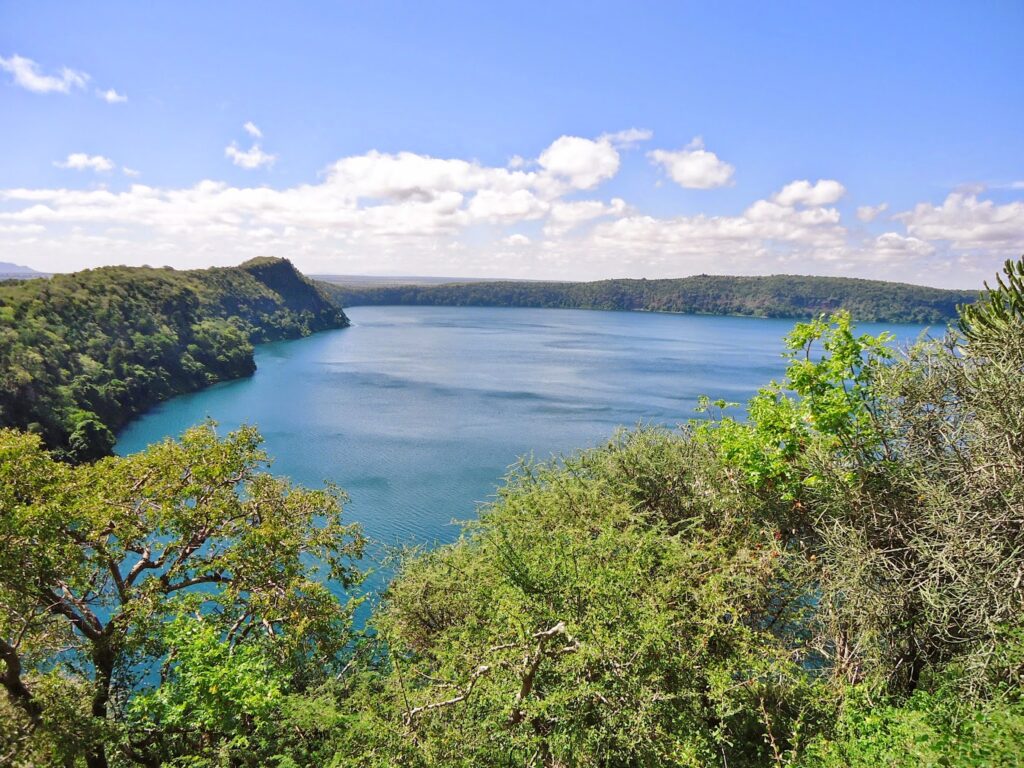
Lake Chala is a striking crater lake on the border between Tanzania and Kenya, about 1.5 to 2 hours from Moshi. Surrounded by steep crater walls and tropical forest, the lake is fed by underground streams from Mount Kilimanjaro.
Activities include hiking, kayaking, birdwatching, and swimming. It’s a peaceful spot, ideal for relaxation and photography. There are also campsites and eco-lodges nearby for overnight stays
Moshi Town, the vibrant capital of the Kilimanjaro Region in northeastern Tanzania, serves as a major hub for tourism, particularly for those embarking on adventures to Mount Kilimanjaro and various safaris in the northern circuit.
Recommended Hotels in Moshi, Tanzania
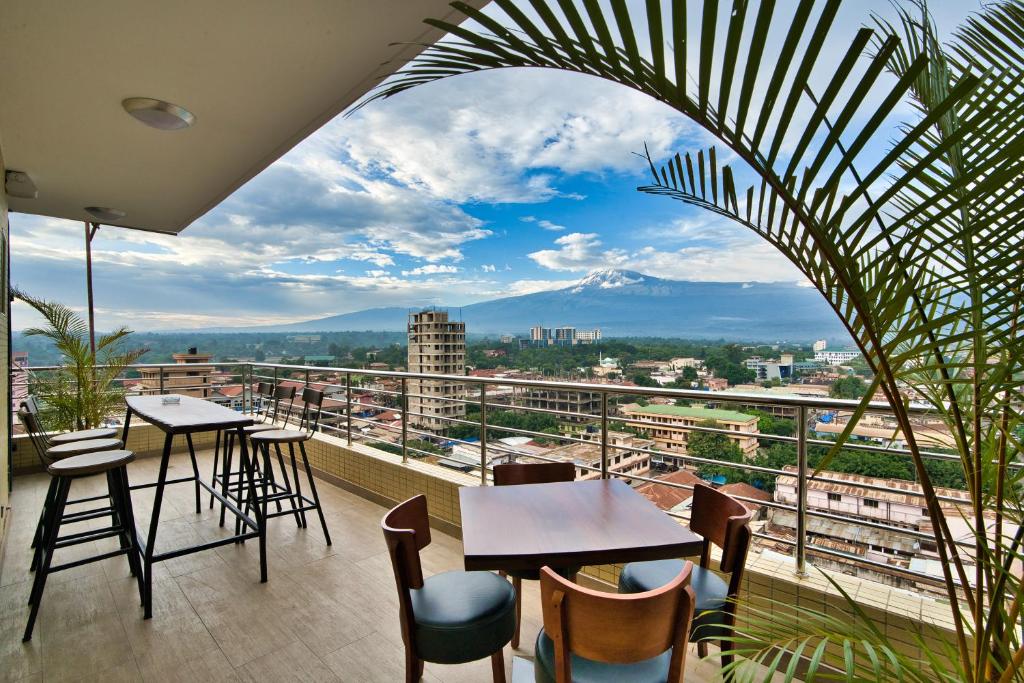
Moshi offers a range of accommodations to suit various budgets and preferences. Some recommended options include:
- Luxury:
- Kibo Palace Hotel Moshi: Features relaxed rooms, some with mountain views, and a rooftop bar.
- Salinero Hotel Moshi: Offers modern amenities with stunning Kilimanjaro views, an on-site restaurant, an outdoor pool, and spa facilities.
- KIA Lodge: Situated a short distance from the city, providing serene escapes with Kilimanjaro views, an airport shuttle, and a restaurant serving Tanzanian dishes.
- Mid-Range:
- Park View Inn: Conveniently located in the heart of Moshi, offering comfortable rooms, complimentary breakfast, and free Wi-Fi.
- Moshi Urban Hotel: Provides a modern and stylish environment with an on-site restaurant and fitness center.
- More Than A Drop: A beautiful and quiet place within walking distance of town, known for its excellent food and comfortable rooms.
- Budget-Friendly:
- Ameg Lodge Kilimanjaro: Offers affordable rates and basic comfortable accommodations.
- Climbers Home: A hostel option with a good rating.
- Kilimanjaro Lodge – MCF Moshi: A guesthouse with positive reviews.
- The Belle View Inn: A bed and breakfast with a good rating.
- Unique Stays:
- Brubru Lodge: A charming lodge with scenic views and warm hospitality.
- Tulivu Kilimanjaro Retreat: Features a beautiful garden, outdoor pool, and comfortable rooms.
In conclusion,
Moshi Town stands as a significant center in northeastern Tanzania, serving as the capital of the Kilimanjaro Region and a vital hub for tourism. Its historical roots, tracing back to the German colonial era and its evolution as a trading post, have shaped its modern identity. Today, while maintaining its administrative and educational importance, Moshi is best known as the gateway to Mount Kilimanjaro and a starting point for diverse safari adventures and cultural excursions. Offering a range of accommodations, experiencing a tropical climate with distinct wet and dry seasons, and providing access to historical sites like Old Moshi and transportation via its domestic airport, Moshi presents a multifaceted appeal to visitors exploring the wonders of Tanzania.
