


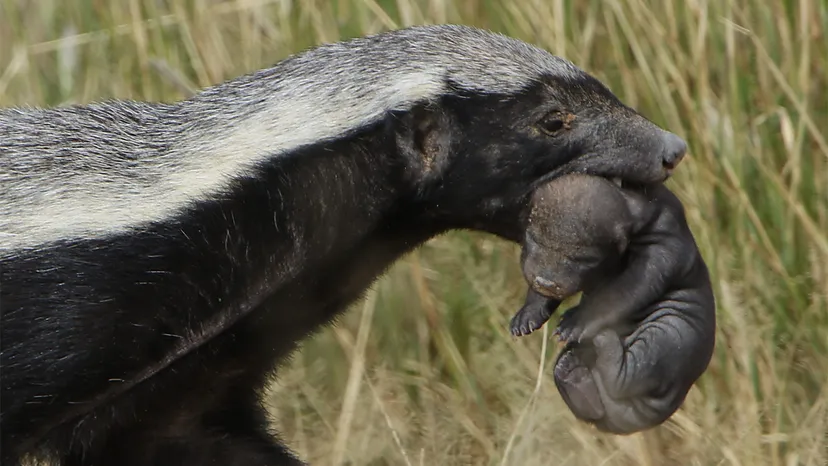
Meet the Honey Badger: Africa’s Unyielding and Adaptable Survivor Fierce, fearless, and shockingly clever, the honey badger (Mellivora capensis) is one of Africa’s most iconic — and underestimated — wildlife species. Known for its aggressive attitude, intelligence, and resilience, this small but mighty mammal thrives in some of the harshest environments on the planet. Whether it’s taking on venomous snakes or standing its ground against lions, the honey badger has earned a reputation as one of nature’s toughest animals.
Master of All Trades: An Incredibly Diverse Diet

The honey badger is perhaps the most opportunistic eater in Africa. Its diet is remarkably varied, allowing it to survive in almost any environment. While its name suggests a love for honey, it’s actually after the bee larvae and pupae within the hive, making it a true connoisseur of protein-rich treats. But that’s just the beginning:
- Carnivorous Powerhouse: Honey badgers are primarily carnivorous. They’ll hunt and consume everything from rodents, birds, eggs, frogs, and lizards to more formidable prey like snakes (even venomous ones like cobras and puff adders!), and even the young of larger mammals.
- Insectivore: Scorpions, beetles, and other insects are a common part of their menu, often dug up with their powerful claws.
- Opportunistic Scavenger: They won’t shy away from carrion (animal carcasses) if other food is scarce.
- Surprisingly Omnivorous: Beyond meat and insects, they will also eat fruit, roots, and bulbs, demonstrating their immense flexibility.
Meet the Honey Badger: Africa’s Unyielding and Adaptable Survivor A Small Animal with a Big Attitude

Don’t let its size fool you. The honey badger stands just 25–30 cm (10–12 inches) at the shoulder and weighs between 9 to 16 kg (20–35 pounds), but it’s fearless when threatened. This animal is famous for confronting predators many times its size, including lions, hyenas, and leopards.
Its loose, thick skin makes it difficult for predators to get a firm grip, allowing the honey badger to twist around and bite back — even when caught. Equipped with powerful claws and sharp teeth, it’s more than capable of holding its own.
Where Do Honey Badgers Live?

Honey badgers are highly adaptable and can be found in a wide range of environments, including:
- Dry savannahs
- Grasslands
- Forested areas
- Semi-deserts like the Kalahari
They are native to much of sub-Saharan Africa, as well as parts of the Middle East and India. They are mostly solitary animals, active during the day or night depending on local conditions and threats.
Are Honey Badgers Endangered?
Currently, honey badgers are listed as Least Concern by the IUCN, but they do face increasing threats from:
- Habitat destruction
- Poisoning by farmers (due to poultry predation)
- Hunting and illegal trade in some regions
Why the Honey Badger Is So Special
The honey badger is a symbol of raw survival, intelligence, and adaptability. It defies the odds and refuses to back down, making it one of Africa’s most inspiring animals.
Conservationists are working to protect their habitats and educate communities about non-lethal ways to protect livestock from these feisty predators.
So next time you’re on safari or exploring African wildlife through your screen, keep an eye out for this small but legendary creature — the honey badger, nature’s toughest survivor.
Quick Facts About the Honey Badger
- Scientific Name: Mellivora capensis
- Lifespan: Up to 24 years (in captivity)
- Diet: Omnivore (snakes, insects, fruits, etc.)
- Habitat: Wide range across Africa, Middle East, and India
- Special Traits: Venom resistance, thick skin, tool use, high intelligence
Solitary and Intelligent
Honey badgers are generally solitary animals, constantly on the move in search of food. They are also highly intelligent. There’s anecdotal evidence of them using tools (like rolling logs to reach food or piling up rocks to escape enclosures) and demonstrating remarkable problem-solving abilities.
Conservation Status
Despite their tough nature, honey badgers face threats, primarily from human conflict due to raiding beehives and poultry farms. However, their vast range and adaptability mean that they are currently classified as “Least Concern” by the IUCN, which is reassuring news for this incredible species.
Where to See Honey Badgers in Tanzania
Tanzania is one of the best places in Africa to spot the elusive honey badger, though sightings are rare because they are nocturnal. In Serengeti National Park, they forage near termite mounds and riverine areas, while Tarangire and Ruaha National Parks offer dense bush and remote landscapes ideal for night encounters. Selous Game Reserve also provides opportunities in its diverse habitats. To increase your chances, join guided night safaris with experts like Jambo International Tour.
Conclusion: The Honey Badger – Africa’s Fearless Survivor
Next time you are on safari in Africa, keep an eye out for this small but mighty mammal. The honey badger may be modest in size, but its fearless nature, intelligence, and adaptability make it one of the most remarkable creatures of the African wilderness. Watching a honey badger in action offers a powerful lesson in resilience: it navigates its environment with determination, takes on predators larger than itself, and thrives in some of the harshest conditions.
More than just a predator, the honey badger is a vital part of the ecosystem, controlling pests and contributing to the balance of its habitat. Observing it reminds us that survival in the wild is about courage, resourcefulness, and persistence. On your next safari, seeing a honey badger is not just a wildlife encounter—it is a glimpse into the incredible adaptability and spirit that defines Africa’s wildlife.
