


Mount Kilimanjaro is one of the most iconic natural landmarks in Africa, drawing thousands of climbers each year to its icy summit. But beyond the well-trodden paths leading to Uhuru Peak lies a geological marvel often overlooked by visitors — Reusch Crater, a massive and mysterious volcanic caldera hidden in plain sight. Located in the heart of Kibo, Kilimanjaro’s central cone, Reusch Crater offers a fascinating glimpse into the mountain’s fiery origins and is one of the least-explored features on Africa’s tallest peak.
What Is Reusch Crater?
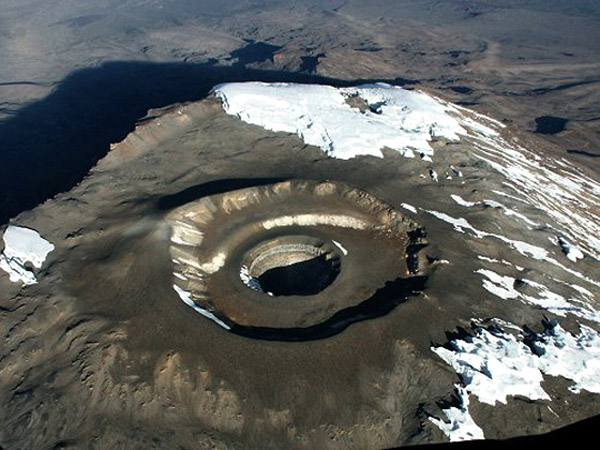
Reusch Crater is a large summit caldera found within Kibo, the highest volcanic cone of Mount Kilimanjaro in northern Tanzania. Measuring approximately 400 meters in diameter and 120 meters deep, this crater sits within the larger Kibo Caldera and is often encircled by snow and ancient ice walls.
Named after Richard Reusch, a German missionary and early explorer of Kilimanjaro, the crater is not the final destination for most climbers. While the majority of trekkers reach Uhuru Peak (5,895 meters) — the highest point on the crater rim — the interior of Reusch Crater lies just beyond and requires an additional descent into the summit basin. This makes it one of the least visited and most enigmatic natural landmarks on Kilimanjaro.
How Reusch Crater Was Formed: Kilimanjaro’s Volcanic Legacy
Reusch Crater is a direct result of volcanic collapse and eruption cycles that shaped Mount Kilimanjaro during the Pleistocene epoch. Around 360,000 years ago, a series of explosive eruptions emptied part of Kibo’s magma chamber, causing the summit to collapse inward and form the current caldera. Over time, the inner crater — now known as Reusch Crater — developed inside this larger depression.
Within the crater, you’ll find features such as volcanic vents, sulfur deposits, glacial remnants, and a hardened lava dome known as the Ash Pit, which still emits occasional steam — a reminder that Kilimanjaro is a dormant, not extinct, stratovolcano.
How to Visit Reusch Crater: A Rare and Challenging Detour
Most climbers on Mount Kilimanjaro follow established routes (like Machame, Marangu, or Lemosho) that culminate at Uhuru Peak — the highest point on the crater rim. However, Reusch Crater lies within the summit and is not part of standard summit itineraries. To visit it, trekkers must descend into the crater basin, often as part of a crater camping extension offered by specialized tour operators.
This add-on is typically reserved for highly acclimatized hikers due to the extreme altitude (above 5,700 meters) and the physical demand of walking into and out of the crater. Hikers usually camp overnight on the crater floor, surrounded by glaciers and alien-like volcanic terrain — an experience described by many as surreal and unforgettable.
Safety Note: The air at this elevation contains roughly 50% of the oxygen at sea level, and temperatures can drop well below freezing. Only attempt the crater visit if you are well-prepared and accompanied by certified Kilimanjaro guides.
Why Reusch Crater Matters for Science and Conservation
Reusch Crater is not just a dramatic landscape; it is a critical site for geological and environmental research. Its inner caldera holds valuable evidence of Kilimanjaro’s volcanic, glacial, and climatic evolution. Layers of ash, lava, and ice reveal how the mountain has changed over hundreds of thousands of years.
Moreover, the glaciers surrounding Reusch Crater are rapidly retreating, a visible sign of climate change in East Africa. Scientific models predict that Kilimanjaro may lose all permanent ice cover by the 2030s. Visiting the crater gives hikers a first-hand look at one of the world’s most visible climate change frontlines.
The Ash Pit: Kilimanjaro’s Inner Core
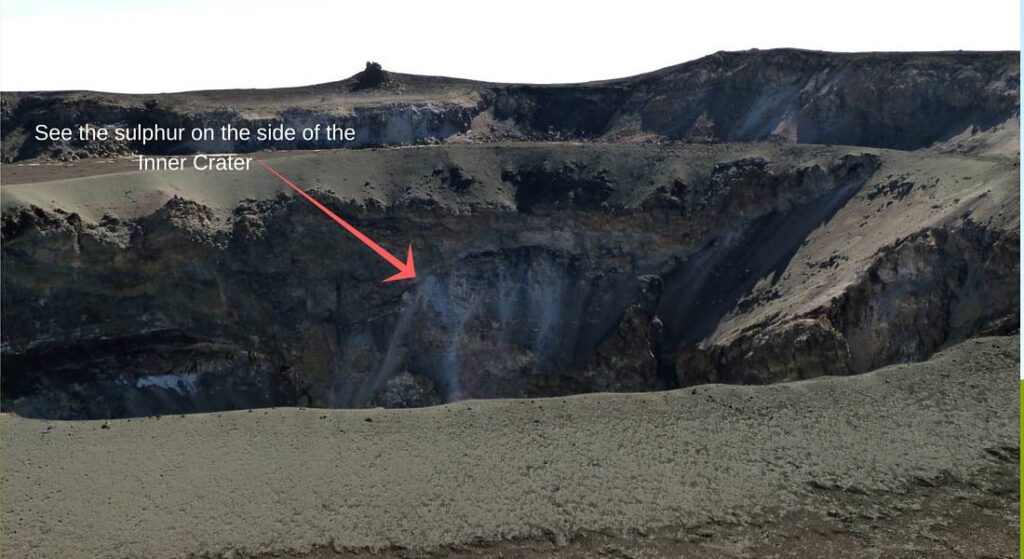
At the center of Reusch Crater lies a striking feature called the Ash Pit — a blackened, bowl-shaped depression filled with hardened lava and sulfur vents. This is considered the true center of volcanic activity on Kilimanjaro, even though the mountain is now dormant.
The Ash Pit is of special interest to volcanologists and is also spiritually significant to local Chagga communities, who have long regarded the mountain as sacred. Reaching the Ash Pit is an intense but awe-inspiring journey into the mountain’s heart.
Responsible Hiking: Protecting Kilimanjaro’s Summit Ecosystem

Due to its high altitude and delicate environment, Reusch Crater is a fragile ecosystem that requires strict conservation efforts. If you’re fortunate enough to visit, follow Leave No Trace principles: carry out all waste, avoid disturbing natural features, and stick to approved trails.
Always trek with operators who are committed to sustainable tourism, as summit activities can have lasting impacts on this unique volcanic landscape. Contributing to responsible travel ensures that future generations of explorers and scientists can continue to study and admire Reusch Crater.
Final Thoughts: A Hidden World at Africa’s Peak
Reusch Crater is one of Mount Kilimanjaro’s best-kept secrets — a hidden world of ice, ash, and stone that tells the story of Africa’s tallest mountain from the inside out. For trekkers willing to go beyond the typical summit trail, the crater offers a rare glimpse into the raw geology and stark beauty of a dormant volcano in one of the world’s most dramatic alpine settings.
Whether you are a geologist, a high-altitude adventurer, or a nature lover, exploring Reusch Crater is a once-in-a-lifetime experience that reveals the deeper soul of Kilimanjaro — not just as a climb, but as a living, evolving mountain.
