


Mount Kilimanjaro Meaning and History: Tanzania’s Majestic Mountain invites readers into the rich tapestry of Africa’s highest peak—where mystery, culture, and nature converge. More than just a towering landmark, Kilimanjaro holds deep symbolic meaning rooted in local languages and spiritual beliefs, with its name evoking images of snow-covered peaks rising from the heart of the tropics. From ancient Chagga legends to the awe of early explorers, and from independence celebrations to global fame, Kilimanjaro’s history is as grand as its summit. This mountain isn’t just climbed—it’s experienced, remembered, and revered.
1. The Name “Kilimanjaro”: Unraveling the Meaning

The exact origin of the name “Kilimanjaro” remains a mystery, wrapped in a blend of languages, local legends, and colonial interpretations. Most scholars agree that the name is likely a combination of Swahili and Chagga words. “Kilima” in Swahili means “mountain,” while “Njaro” could mean “whiteness,” referring to the snow-capped peak, or it may come from a Chagga word meaning “caravan” or “demon.” Other theories suggest it may refer to “Shining Mountain” or “Home of God.” The name was widely adopted after German and British explorers recorded it in the 19th century, popularizing it worldwide.
2. A Sacred Mountain in African Culture

Long before it became a tourist destination, Kilimanjaro held deep cultural and spiritual significance for local communities like the Chagga, Maasai, and Pare. For the Chagga people who live on the mountain’s fertile slopes, Kilimanjaro was seen as a source of life, mystery, and spiritual power. Some believed it was the dwelling place of ancestors or gods. Stories of spirits living in the mountain’s ice fields, punishing those who dared to climb too high, discouraged early ascents and helped preserve its sanctity.
3. Kilimanjaro Meaning and History: Tanzania’s Majestic Mountain Colonial Encounters and Western Discovery

European explorers first documented Kilimanjaro in the mid-19th century. German missionary Johannes Rebmann was the first European to report seeing snow on the equator in 1848. At first, many dismissed his claims, as snow in Africa seemed impossible. Later expeditions confirmed Kilimanjaro’s icy summit, sparking global fascination. During the colonial period, the mountain became part of German East Africa, and later British Tanganyika. In 1961, when Tanzania gained independence, the newly raised Tanzanian flag was taken to the summit as a symbol of national pride.
4. Kilimanjaro Today: Tourism, Challenge, and Conservation
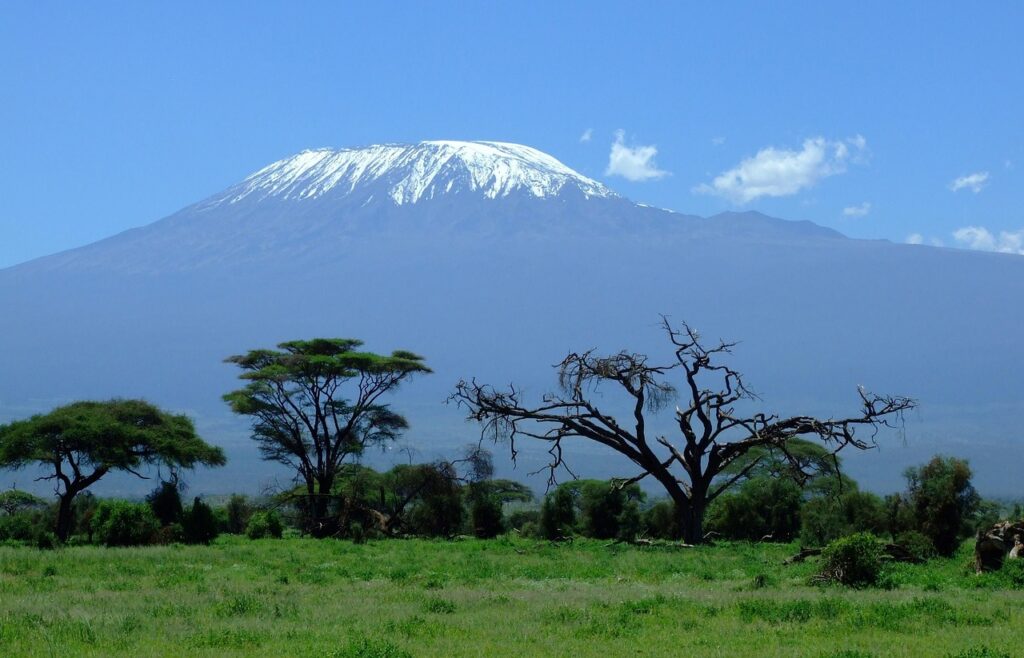
Today, Mount Kilimanjaro is a symbol of Tanzania and one of Africa’s top tourist attractions. Thousands of climbers from around the world attempt to summit Uhuru Peak, the highest point in Africa at 5,895 meters (19,341 feet). It’s one of the Seven Summits, drawing adventurers and nature lovers alike. However, climate change is threatening Kilimanjaro’s glaciers, which have shrunk significantly in the past century. Conservation efforts are now in place to protect this natural treasure and its unique ecosystems.
5. Kilimanjaro’s Enduring Legacy

Beyond its natural beauty, Kilimanjaro has inspired artists, poets, musicians, and political movements. It appears in Ernest Hemingway’s famous short story “The Snows of Kilimanjaro” and is referenced in numerous songs and speeches, often symbolizing freedom, strength, and perseverance. For Tanzania, Kilimanjaro is more than a mountain — it’s a national icon and a source of identity and pride.
Conclusion: Kilimanjaro – More Than Just a Mountain
Mount Kilimanjaro is more than Africa’s highest peak—it is a timeless symbol of Tanzania’s cultural pride, natural wonder, and global fascination. Its very name carries mystery, with roots tied to Swahili, Chagga, and colonial interpretations, reflecting the diverse peoples who have lived in its shadow. Historically, Kilimanjaro has inspired explorers, challenged climbers, and nurtured communities with its fertile slopes. Spiritually, it holds deep meaning for local traditions, symbolizing life, resilience, and sacredness.
Today, Kilimanjaro continues to capture the imagination of travelers worldwide, standing as both a geographical marvel and a cultural icon. Whether admired from afar or conquered step by step, it reminds us of humanity’s enduring connection to nature, history, and the pursuit of greater heights.
