
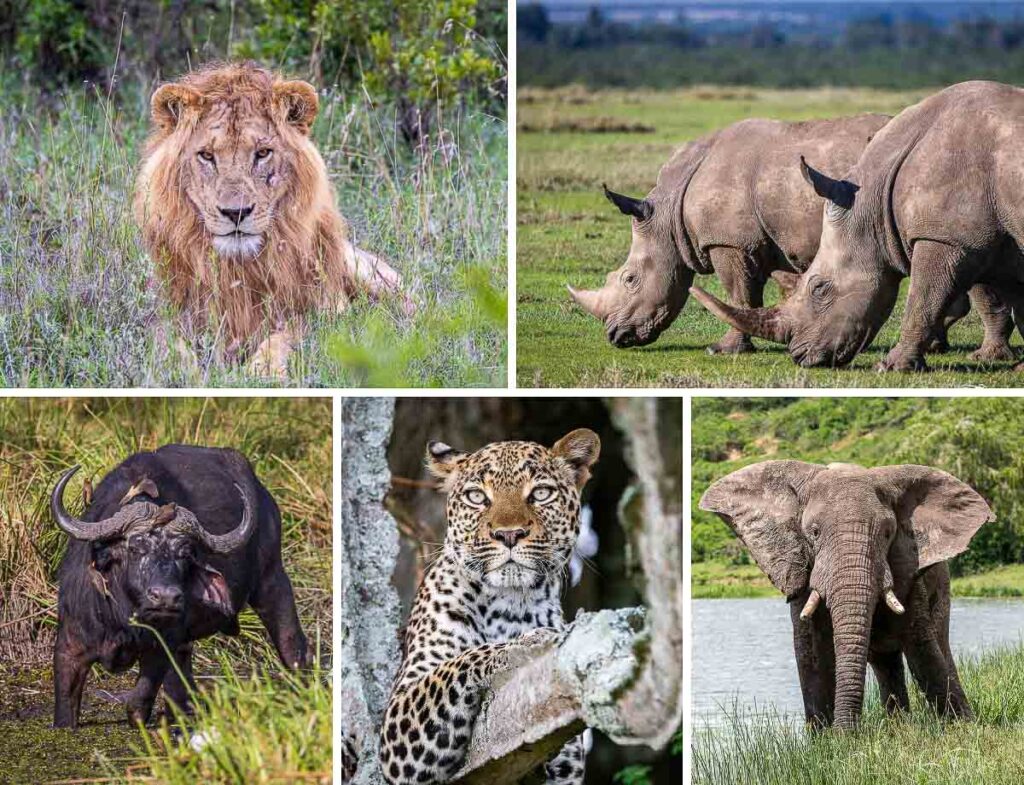
Africa`s Big 5 animals They are among the most exciting and special wildlife experiences on an African safari. the lion, elephants, leopards, rhinoceros and cape buffalo you may think what make this animals so specials.
Most of these species are well adapted to Africa’s diverse ecosystems, including savannahs, forests, open grasslands, wetlands, and semi-arid areas, where they can be found across different regions.
in last 2 year Jambo international tour we guiding travelers to experience big 5 animals in different national park in Tanzania like Serengeti national Park, Tarangire national park, lake Manyara and arusha national park in northern Tanzania.
What Are the Africa`s Big 5 Animals and Why Are They So Famous?
They are called the “Big Five” because early hunters used this term to describe the five most difficult and dangerous animals to hunt on foot: the African lion, African elephant, leopard, rhinoceros both (white & black), and cape buffalo.
The African lion. King of the Jungle.

Lions are one of the Big Five safari animals, known for their strength and power. With sharp claws and strong jaws, they can take down animals much larger than themselves. They are also highly social creatures, living in groups called prides. A pride usually consists of two or more males alongside several lionesses, who work together to hunt and protect their territory. As one of Africa’s most iconic predators, encountering a lion in the wild is an unforgettable experience that showcases both raw power and family cooperation.
Interesting Facts About African Lions.
- Roar: A lion’s roar can be heard from up to 8 kilometers (5 miles) away. They use it to mark their territory, communicate with their pride, and intimidate rivals.
- Females are the main hunters: The lionesses do the majority of the hunting, working together in coordinated groups to stalk and ambush prey.
- They sleep a lot and are diurnal and nocturnal animals: They do most of their hunting during the night.
The African leopard: Master of stalker.

Leopards are the hardest of the Big Five to spot. They are nocturnal, meaning they hunt from night until morning. When the sun rises, they climb up a tree and sleep the day away, hidden among the branches.
At first glance, they look like cheetahs. But look closer. Leopards have rosette-shaped spots. They also do not have black tear marks on their face like cheetahs do. Their bodies are strong and muscular, built for power.
Leopards are called stalkers because of how they hunt. They move slowly and silently, using bushes and tall grass to hide. They get so close to their prey that by the time they strike, it is already too late.
With sharp claws and incredible strength, they can climb trees while carrying prey heavier than themselves. That is how they keep their food safe from lions and hyenas.
The Big Five name started back in the days when people hunted these animals. Leopards made the list because they were one of the hardest to catch. They run fast, leap far, and climb trees in seconds. Hunters back then struggled to track them because they would just vanish up a tree. Today, no one hunts them anymore. The name now simply refers to the five most exciting animals to see on safari.
The African elephants: The largest land Mammals.
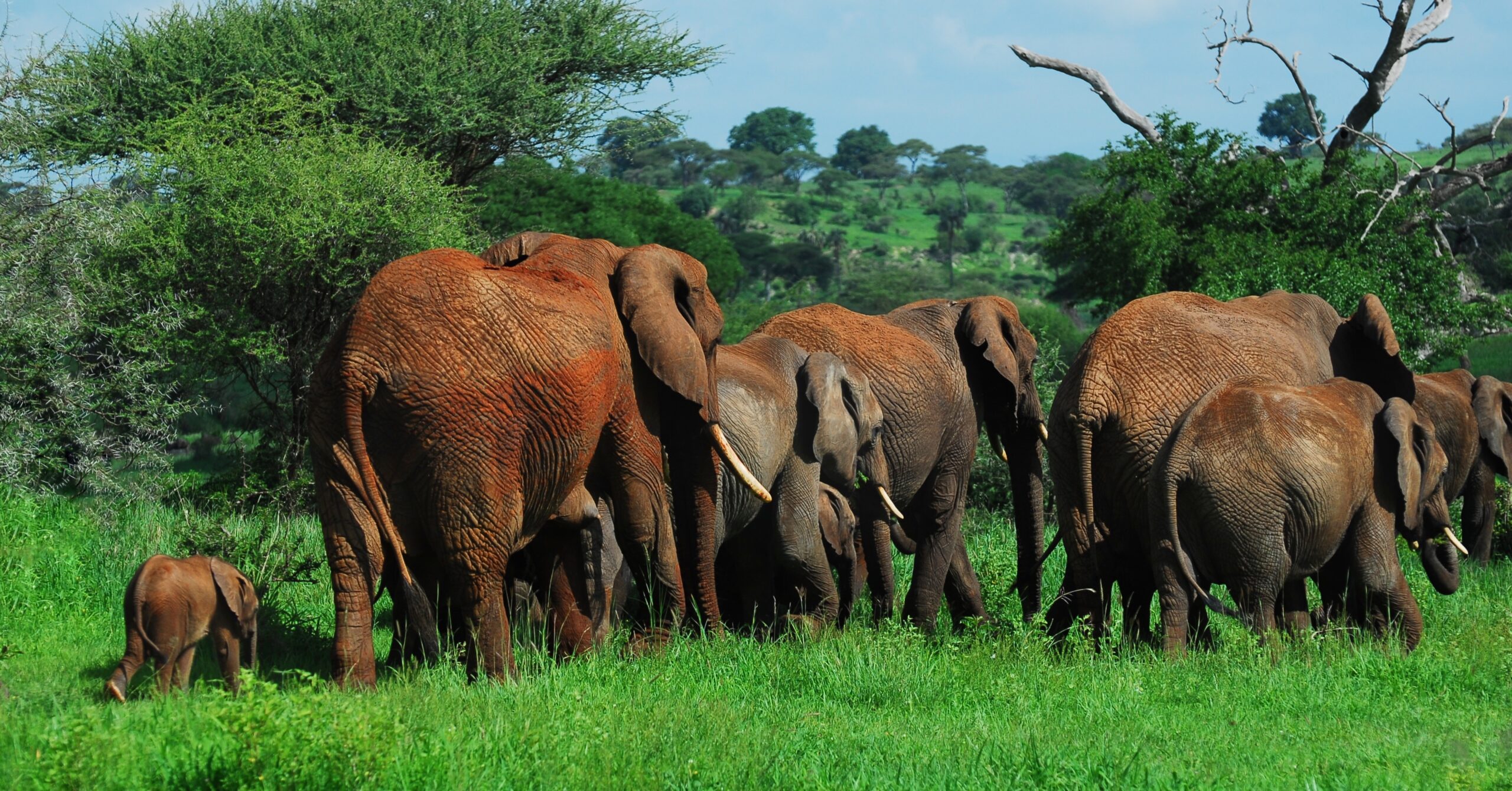
African elephants are the largest land mammals on Earth. They are highly social animals that live in family units made up of related adult females and their calves. The herd is led by the oldest female, called the matriarch.
Elephants spend most of their time eating. They are bulk feeders, consuming huge amounts of grass, leaves, bark, and fruit every day. they eat so much and they shape the environment around them. They knock down trees, dig up waterholes, and spread seeds through their dung. This creates space and resources for other animals to thrive. That is why they are called a keystone species—they play a vital role in keeping the ecosystem healthy.
Elephants are part of the Big Five because hunting them it challenging. Despite their large size, they could disappear into bushes. They are also protective of their young, making them dangerous if you got too close.
The Cape Buffalo: The africaa most dangerous animals

The Cape Buffalo is a massive wild ox native to sub-Saharan Africa, standing up to 1.5 meters tall and weighing close to 800 kilograms. It is not a predator it eats grass yet it is widely considered the most dangerous animal on the Africaa. It lives in large herds across open savannas and dense forests, from Tanzania and Kenya down to South Africa. What separates it from ordinary cattle is its temperament: unpredictable, territorial, and completely unafraid of anything that crosses its path.
A lone buffalo is far more dangerous than one inside a herd. When a bull grows old or weak, the herd pushes him out, and he spends the rest of his life alone bitter, permanently on edge, and with nothing left to lose. Without the herd around him, he has no protection, so he treats everything that moves as a potential threat. He does not wait to see your intention. He charges first. That is why experienced guides in Tanzania and across East Africa will tell you plainly stumbling upon a lone buffalo in thick bush is more frightening than meeting a lion, because the lion at least gives you a moment. The old buffalo gives you none.
Why Are The Rhinoceros Considered Part Of The African Big 5 Animals?

The Rhinoceros earned its place in the Big Five for one simple reason: it is nearly impossible to stop once it decides to charge. What many people don’t realize is that Africa is home to two distinct species the White Rhino and the Black Rhino and they are quite different in character.
The White Rhino is generally calmer, grazes on grass, and usually their calves be behind when they walking. The Black Rhino, however, is notoriously short-tempered, browsers on shrubs and thorny plants, and is far more likely to charge without warning and their calve be in front when they walking.
It is the Black Rhino that hunters feared most, and the one that truly justified the Big Five title. Both species can weigh over 1,000 kilograms and reach speeds of 50 km/h enough to flip a vehicle clean off the ground. Their thick skin, heavy armor-like build, and explosive aggression made them one of the most dangerous animals to face on foot, which is exactly the standard the Big Five was built on.
Why the Cheetah Was Left Out of the Big Five Animals

The Cheetah is one of Africa’s most fascinating predators, built almost entirely for speed. Its slim, lightweight body, long legs, and flexible spine allow it to reach incredible speeds of around 60–70 km/h in short bursts. The black tear marks running from its eyes down to its mouth help reduce glare from the sun, giving it clearer vision while hunting in open grasslands.
But despite all these advantages, the cheetah is not part of the Big Five—and the reason comes down to strength and survival, not speed.
Unlike heavier predators such as the African lion or the Leopard, the cheetah’s body is not built for fighting. It is designed for quick acceleration and agility, not power. Because of this, cheetahs tend to avoid confrontation. When faced with stronger animals like lions, Spotted hyena, or even jackals, they often choose to retreat rather than fight. This is also why they sometimes lose their prey to these stronger competitors.
Cheetahs are generally shy around humans and prefer to stay away rather than attack. This behavior makes them less dangerous compared to other large predators.
The Big Five, however, was never about speed or beauty—it was about which animals were the most difficult and dangerous to hunt on foot. Animals on that list are known for their strength, aggression, and ability to fight back when threatened.
Why Hippos Kill More People But Still Aren’t in the Big Five Animals?

Many people are surprised that the Hippopotamus is not part of Africa’s Big Five. It is a huge and powerful animal, and in reality, it causes more human deaths than most of the animals on that famous list.
Hippos are mostly nocturnal. During the day, they stay in water to protect their skin from the sun and to keep their bodies cool. But in the evening, they come out and move onto land to feed, sometimes walking several kilometers in search of grass. Around rivers and lakes, you will often see muddy areas where hippos mark their territory. They use dung, spreading it with their tails, to create clear paths and boundaries that help them return to the same place after feeding.
So why Hippos aren’t they in the Big Five animals?
The answer is simple: the Big Five was never about how dangerous an animal is. It was a term used by hunters to describe the animals that were the hardest to hunt on foot, like the African lion or Cape buffalo. Since hippos spend much of their time in water and follow predictable routes at night, they were not considered as difficult to hunt compared to those animals.
Where to see Africa Big 5 Animals

Tanzania is one of the best destinations in Africa to experience the famous Big Five — offering incredible wildlife, beautiful landscapes, and some of the most reliable sightings on the continent.
The journey often begins in the world-famous Serengeti National Park, known for its vast open plains and rich wildlife populations. Here, you have a strong chance of seeing lions, leopards, elephants, and buffalo in their natural habitat, especially during game drives across the endless savannah.
Another top location is the Ngorongoro Crater, a unique natural wonder where animals live within a collapsed volcanic caldera. This area offers one of the best chances to spot all members of the Big Five in a single day, including the rare rhinoceros.
Beyond Tanzania, there are other iconic destinations worth mentioning. Kruger National Park is one of Africa’s largest and most developed safari parks, offering excellent Big Five sightings with well-established infrastructure. In Kenya, the Maasai Mara National Reserve is another top safari destination, especially famous for its wildlife density and the Great Migration.
Your Big Five Safari Starts Here Let’s Plan It Together
Your Journey to Africa’s Big Five Begins Here Expertly Planned, Unforgettable Experience
Witnessing the Big Five in their natural habitat is more than just a safari—it’s an unforgettable journey into the heart of Africa’s wilderness. With Jambo International Tour, travelers gain expert guidance, safe access to prime wildlife areas, and insider knowledge that transforms every sighting into a rich educational and emotional experience. From observing the majestic lions to spotting elusive leopards, each encounter offers a deeper understanding of wildlife behavior and the importance of conservation. By choosing Jambo International Tour, visitors not only enjoy an unforgettable adventure but also support sustainable tourism practices that help preserve these iconic species and their habitats for generations to come. This makes every safari with Jambo International Tour not just a trip, but a meaningful journey into Tanzania’s extraordinary natural heritage.
