- Home
- Rongai Route
Rongai Route
Hidden Gem Route
Rongai Route
Journey through Kilimanjaro’s hidden northern wilderness
Price From
$1500
Overview of the Rongai route
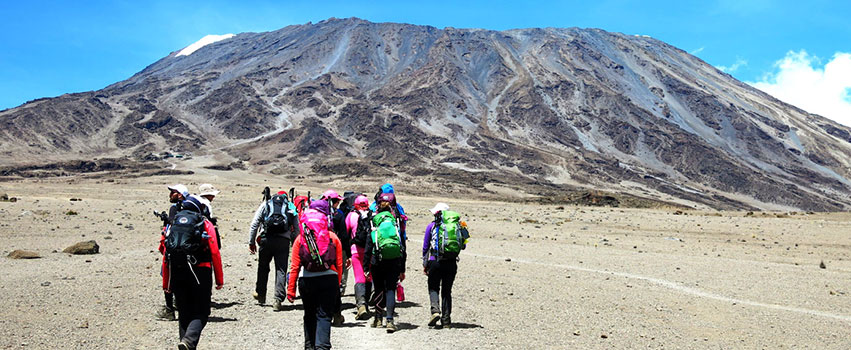
The Rongai Route is Kilimanjaro’s hidden gem — a quieter, more remote path that begins on the mountain’s northern slope near the Kenyan border. Far from the crowded southern routes, Rongai offers an immersive trekking experience through diverse ecological zones, from lush coniferous forests to alpine deserts and lunar-like landscapes near the summit.
Ideal for those looking for a peaceful and scenic Kilimanjaro climb, Rongai is gaining popularity in 2024 among both first-time climbers and seasoned adventurers who crave a less-traveled trail with high success rates.
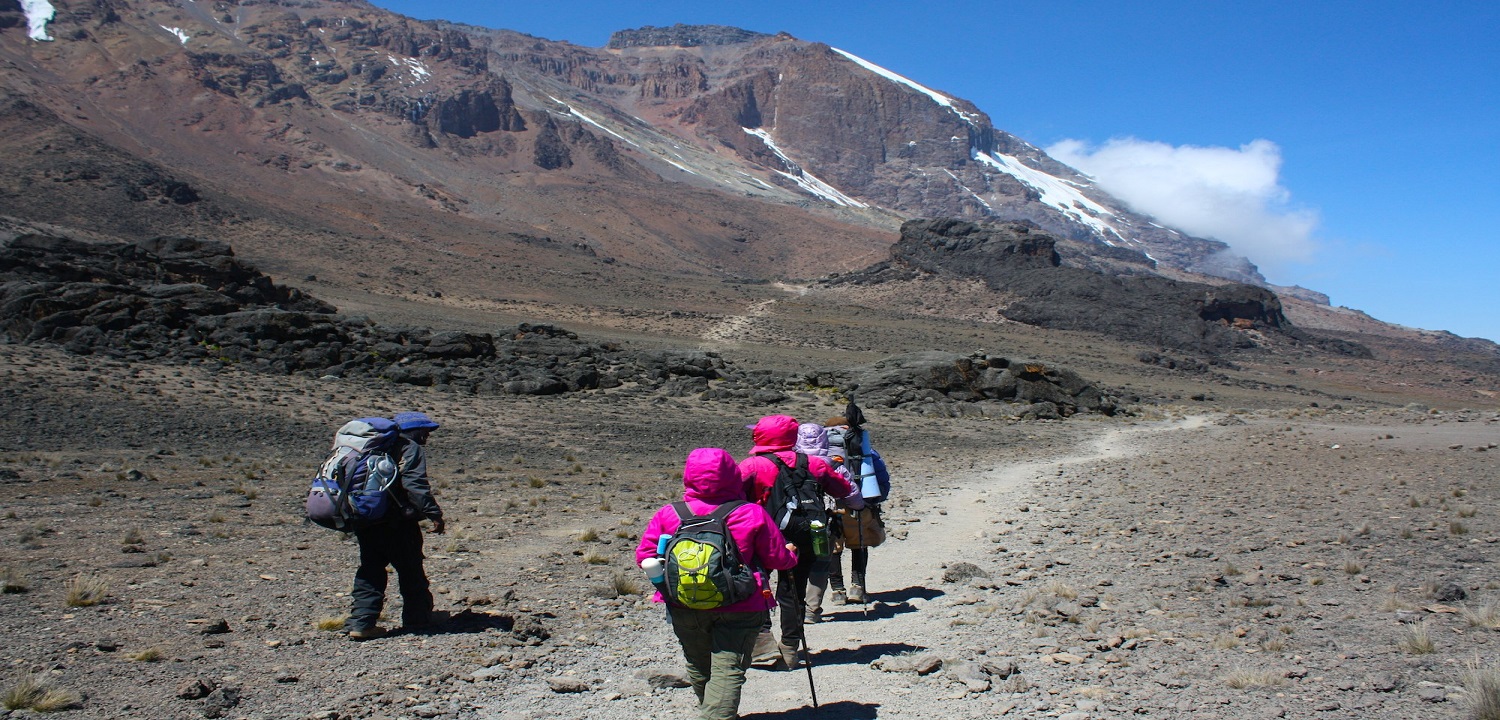
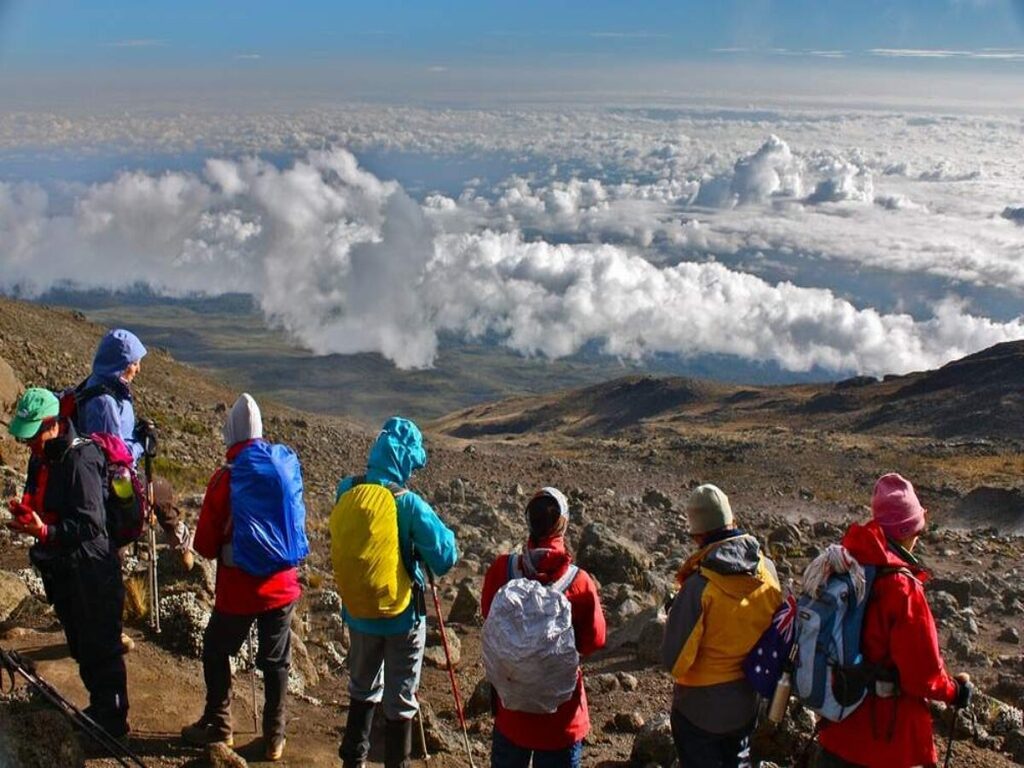
One of the most unique aspects of the Rongai Route is its contrasting terrain. The ascent begins in dry, open woodlands, offering unobstructed views of the rugged Mawenzi Peak and sweeping vistas across the vast plains of northern Tanzania and southern Kenya. As you ascend, the landscape gradually transforms, revealing Kilimanjaro’s iconic Giant Groundsels, high-altitude moorlands, and rocky slopes shaped by ancient volcanic forces.
The descent follows the lush Marangu Route, giving you a chance to explore a different side of the mountain — filled with tropical rainforests, waterfalls, and vibrant greenery. It’s like getting two routes in one unforgettable journey.
What sets Rongai apart?
✅ Low foot traffic – Perfect for trekkers who value solitude and a stronger connection to nature.
✅ Breathtaking sunrise views near Mawenzi Peak — truly a photographer’s dream.
✅ Drier conditions, especially ideal for rainy seasons.
✅ Wildlife sightings such as colobus monkeys, sunbirds, and even the rare Bearded Vulture soaring overhead.
✅ High summit success rate due to the gradual ascent profile and ample acclimatization time.
Whether you’re dreaming of conquering Kilimanjaro in 2024 or looking for a route that balances beauty, challenge, and serenity — the Rongai Route promises an unforgettable, soul-stirring adventure.
Expert Recommendation
The Rongai Route is offered in both 6-day and 7-day programs, giving climbers the flexibility to choose the option that best fits their fitness level, time frame, and experience with high altitudes.
If you’re a first-time climber or haven’t experienced high-altitude trekking before, the 7-day itinerary is strongly recommended. The additional day on the mountain allows for better acclimatization, which means your body adjusts more gradually to the altitude. This not only increases your chances of successfully reaching Uhuru Peak but also makes the journey more enjoyable and less physically demanding.
The 6-day itinerary, while still a great option, is more suitable for experienced trekkers who have already spent time at high elevation or are confident in their altitude adaptation. It’s a slightly faster ascent with fewer acclimatization breaks, which may increase the risk of altitude-related challenges for beginners.
Whichever option you choose, our expert guides, well-paced itineraries, and top-notch support team will ensure your Kilimanjaro climb via the Rongai Route is safe, scenic, and truly unforgettable.
Rongai Route - Summit Success Rate
At Jambo International Tour, we’ve proudly guided climbers on life-changing journeys to the top of Mount Kilimanjaro, and the Rongai Route continues to stand out as one of the most reliable and rewarding options. Whether you choose the 6-day or 7-day itinerary, you can expect a high chance of success — and an unforgettable experience.
Here are our latest summit statistics for this route:
6-day Rongai Trek
▸ Crater Rim: 91.0%
▸ Uhuru Peak: 86.0%7-day Rongai Trek
▸ Crater Rim: 93.9%
▸ Uhuru Peak: 86.8%
The data speaks for itself — the 7-day Rongai itinerary offers a slightly better acclimatization profile, which can make all the difference, especially for those new to high-altitude trekking. While seasoned hikers may feel confident tackling the 6-day version, beginners will have a much higher summit success rate with the extra day for acclimatization.
Rongai Route Detailed Itinerary
Arrival in Tanzania
Arrival.
Arrival at Kilimanjaro International Airport (JRO), where you will meet an Jambo Guide representative, and transfer to the hotel under the rate. The hotel will provide all the essentials for a comfortable stay In the evening there will be a briefing with our managers, who will also make sure you are ready to begin the climb.
Day 1
Trekking from Nalemuru Gate to Simba Camp.
In the morning, your guide and mountain support team will meet you at your hotel for a pre-trek briefing and equipment check. Once complete, you will travel by vehicle to the Nalemuru Gate (2,020 m / 6,627 ft), located on the northern side of Kilimanjaro near the Tanzanian-Kenyan border. Upon arrival, the necessary park entry procedures will be completed, including permit issuance and registration with the park’s search and rescue service.
The day’s trek begins with a gradual ascent through coniferous forest along the mountain’s northern slope, offering a peaceful and scenic introduction to the journey ahead. The hike to Simba Camp (2,671 m / 8,761 ft) is moderate in difficulty, and your guide will set a pace designed to support acclimatization—slow, steady, and mindful.
Upon arrival at camp, your mountain crew will have already set up the tents and started preparing dinner, allowing you to settle in, rest, and enjoy your first night on the mountain.
Day 2
Trekking From Simba Camp To kikilewa Camp.
The day begins with an early breakfast before setting out from Simba Camp toward your next destination: Kikilewa Camp, located at 3,630 meters (11,906 feet). This segment of the ascent is noticeably more demanding than the previous day, as the trail gains elevation more rapidly.
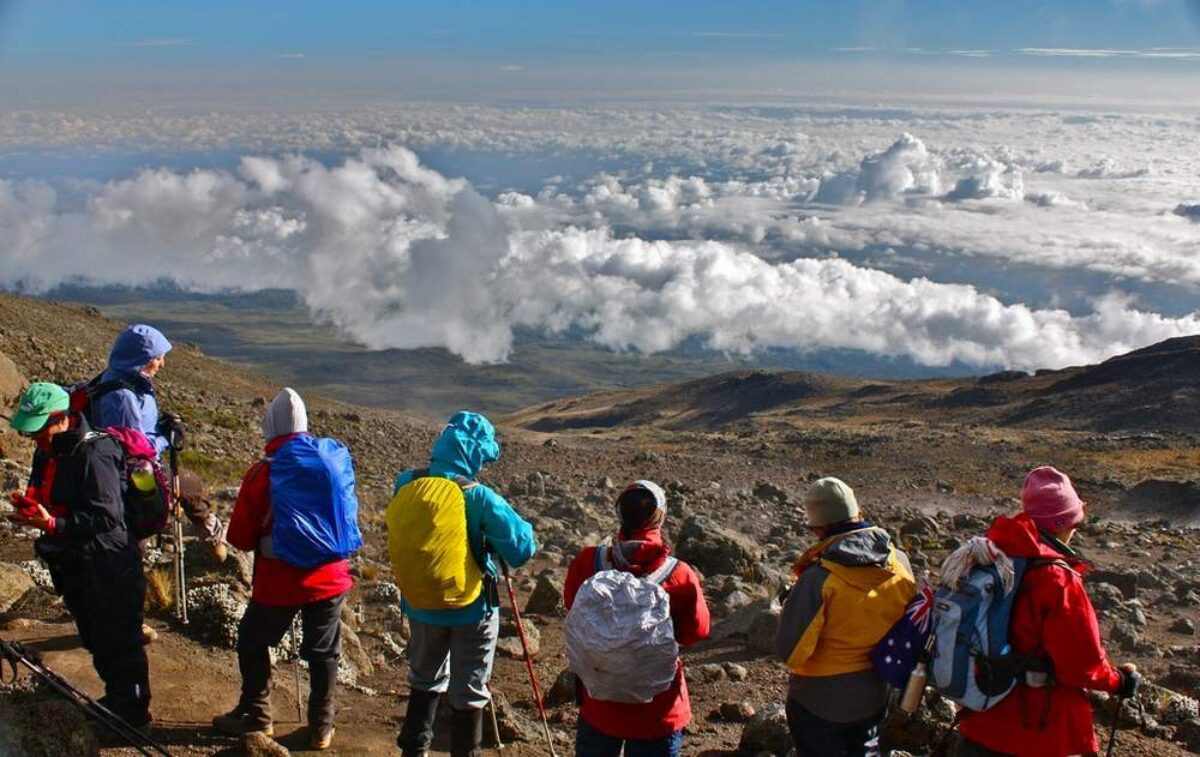
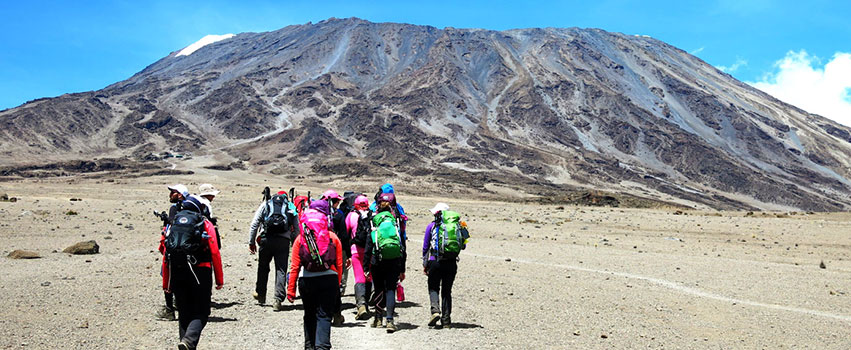
As you progress, the surrounding landscape begins to shift, and with clear skies, you’ll be rewarded with stunning views of the Kibo Volcano—its iconic dome rising above the clouds in the distance. Upon arrival at Kikilewa Camp, we recommend taking time to rest and recover, allowing your body to adjust to the higher altitude in preparation for the days ahead.
Day 3
Trekking From Kikilewa Camp Mawenzi Tarn Camp.
Following an early breakfast, the day’s journey continues with a trek to Mawenzi Tarn Camp, located at the base of Mawenzi Volcano—Kilimanjaro’s second-highest peak. The route offers increasingly rugged and dramatic scenery as you ascend into the alpine zone. Upon arrival at camp, lunch will be served, followed by a two-hour rest period.
In the afternoon, an acclimatization hike is scheduled, ascending approximately 200 meters (656 feet) toward the lower slopes of Mawenzi. This gentle trek is designed to support the acclimatization process by exposing your body to a higher altitude before returning to the lower elevation of the camp.
While the hike is not physically demanding, it plays a critical role in preparing for the summit. Taking acclimatization seriously significantly improves your chances of a safe and successful ascent, reducing the risk of altitude-related issues. Dinner will be served at camp upon your return.
Day 4
Trekking from Mawenzi Tarn Camp to Kibo Hut Camp
This day involves a steady trek toward Kibo Hut Camp, situated at an elevation of 4,720 meters (15,482 feet). As you gain altitude, the terrain transitions noticeably into a barren, rocky semi-desert—marking one of the starkest environmental shifts on the mountain.
The trail itself is not technically demanding, but it is essential to maintain a slow, consistent pace to conserve energy for the summit push ahead. Upon arrival at Kibo Hut, the focus shifts to rest and preparation. You are encouraged to minimize physical activity, hydrate thoroughly, and get as much sleep as possible, as the final ascent to Uhuru Peak (5,895 meters / 19,336 feet) begins later that same night.
Day 5
Trekking to Uhuru Peak and Descent to Horombo Camp
The summit attempt begins at night as your group departs from Kibo Hut Camp (4,720 m / 15,482 ft) en route to Uhuru Peak, the highest point on Mount Kilimanjaro at 5,895 meters (19,336 feet). While the trail itself is not technically challenging, the high altitude makes this stage physically demanding, with even moderate exertion requiring significant effort.
For safety and support, climbers are paired and assigned a dedicated guide who will monitor their condition throughout the ascent, ensuring both physical and mental well-being. Upon reaching Uhuru Peak, and weather permitting, there may be an opportunity to descend briefly to the nearest glacier before beginning your return.
Following the summit, you will descend to Kibo Hut for a two-hour rest. Afterward, the journey continues down the mountain to Horombo Camp (3,720 m / 12,202 ft), where you will spend the night.
Day 6
Descent from Horombo Camp to Marangu Gate
After a warm breakfast at Horombo Camp, the final leg of your descent begins as you make your way toward the exit point of Kilimanjaro National Park—Marangu Gate, located at 1,970 meters (6,462 feet). The trail gradually winds down through lush rainforest, offering a serene and reflective end to your journey.
Upon arrival at the gate, your group will reunite to celebrate the successful completion of the trek. You’ll have the opportunity to share your thoughts and reflections in the guestbook, marking the end of this remarkable experience. Commemorative certificates will then be presented to recognize your achievement, followed by a comfortable transfer back to your hotel for much-deserved rest and recovery.
Departure Day
After a period of rest at the hotel, a transfer to the airport will be arranged according to your flight schedule.
Day 1
Airport Pick-Up & Arrival.
On this day, you will be picked up from either Kilimanjaro or Arusha Airport and driven to your accomodation Hotel. After settling in, your guide will visit to brief you on the hike, go over the day-by-day plan, and check if you have all the necessary gear.
Day 2
Rongai gate (1950m) to 1st caves camp (2600m).
Rongai Gate (1950m) – 1st Caves Camp (2600m)
Hiking time: 5 hours
Distance: Approximately 8 kilometers
Habitat: Montane Forest
After breakfast at your hotel, you’ll be picked up from your Accomodation and driven to Marangu Gate (1980m) for registration. The porters will pack your gear while you and your guide check in with the Tanzania National Park (Tanapa). You’ll then be driven to the Rongai trailhead, about 2.5 hours away.
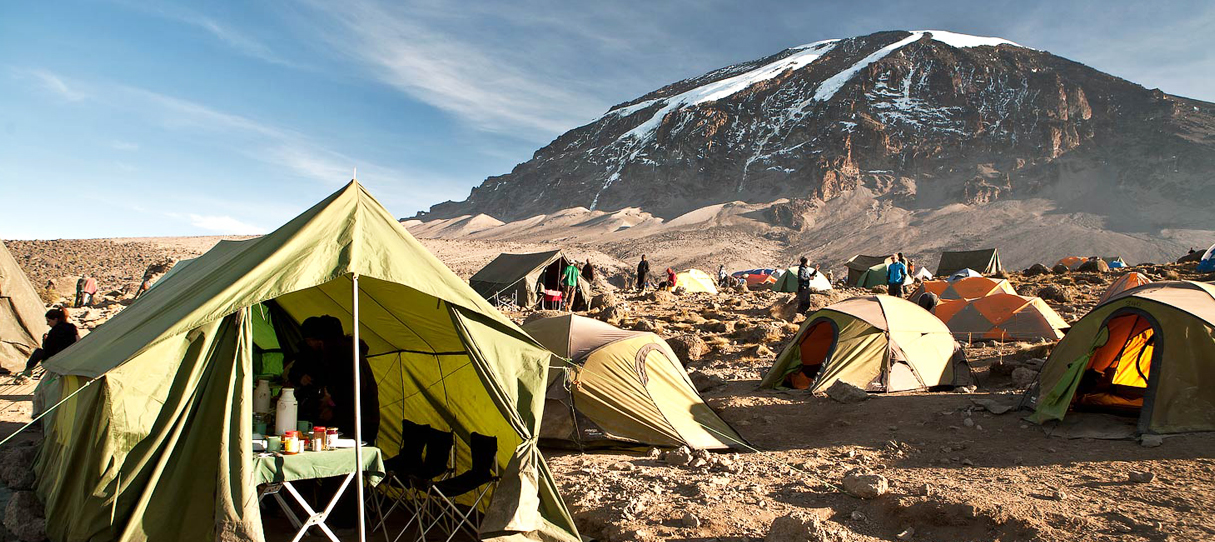
The hike begins through cornfields and then enters a pine forest with a gradual ascent. Around halfway, you’ll stop for lunch. By the late afternoon or early evening, you’ll reach the 1st Caves Camp (2600m). The porters and chef will arrive ahead of you, set up the camp, boil water, and prepare snacks for your arrival.
Day 3
1st camp caves to Kikelewa cave (3600m).
1st Caves Camp (2600m) – Kikelewa Cave (3600m)
Hiking time: 6-7 hours
Habitat: Moorlands
After a hot breakfast, hikers will begin their ascent to Kikelewa Cave (3600m), passing by Second Cave (3450m), which offers a great spot to rest and enjoy a packed lunch. This section of the trail takes you through the moorlands, where you’ll witness dramatic landscapes and the unique flora of higher altitudes. Upon arrival at Kikelewa Cave, your tents will already be set up, and porters will have drinking and washing water ready. A warm evening snack will be provided, followed by a delicious dinner prepared by the chef. The camp is exposed, so be prepared for freezing temperatures at night. It’s important to dress in layers to stay warm, as temperatures can drop significantly after dark. A good night’s rest is crucial to prepare for the challenges ahead.
Day 4
Kikelewa Cave to Mawenzi Tarn Camp (4330m).
Kikelewa Cave (3600m) – Mawenzi Tarn Camp (4330m)
Hiking time: 3-4 hours
Habitat: Moorlands
Today’s hike is short but steep, taking you to Mawenzi Tarn Camp (4330m). As you walk through the moorlands, you’ll see unique plants like giant lobelia and groundsel. Once at camp, you’ll enjoy stunning views and have time to acclimatize. Hot dinner and washing water will be ready as you take in the beautiful sunset.
Day 5
Mawenzi Tarn Camp (4330m) – Kibo Hut (4700m).
Mawenzi Tarn Camp (4330m) – Kibo Hut (4700m)
Hiking Time: 4-5 hours
Habitat: Alpine Desert
After breakfast, hikers will continue east for a half-day hike to Kibo Hut. This camp is located in the “Saddle,” the area between Mawenzi and Kibo peaks. The landscape is an alpine desert, and there is no water available at the camp, though you can purchase mineral water and soft drinks. An early dinner will be served, allowing hikers to rest before the summit attempt later that night. Your guide will give a briefing on summit preparation. Be sure to rest and aim to sleep by 19:00.
Day 6
Summit Attempt
Summit Attempt: Kibo Hut (4700m) – Uhuru Peak (5895m) – Horombo Hut (3720m)
Hiking Time: 8 hours to Uhuru, 6 hours to Horombo
Habitat: Stone scree / Ice-cap summit
Distance: 6 km ascent, 21 km descent
Your guide will wake you around 23:30 to begin the summit attempt. The trail is rocky as you climb to Hans Meyer Cave (5150m), then continue to Gilman’s Point (5681m), located on the crater rim. From there, you’ll follow a snow-covered trail to the summit, Uhuru Peak (5895m). Reaching the summit is a huge achievement, and you’ll have a short time to take photos and enjoy tea before starting the descent.
The descent to Kibo Hut takes about 3 hours. After resting and eating, you’ll continue down to Horombo Hut (3720m) to complete the day’s trek.
Day 7
Horombo Hut (3720m) – Marangu Gate (1980m).
Horombo Hut (3720m) – Marangu Gate (1980m)
Hiking time: 6 hours
Distance: Approximately 27 kilometers
After a well-deserved breakfast, the team will celebrate with dancing and singing. This is the time to present tips to your guides, assistant guides, chefs, and porters. After the celebration, you will begin your descent back to Marangu Gate, which takes about 6 hours. Upon arrival at gate, you’ll be driven back to Arusha/Moshi, or if preferred, you can be dropped off at the airport. Alternatively, if you wish to take a more relaxed approach, we can schedule your airport drop-off for the following day to give you time to unwind and explore a bit more.
Climbing Cost Includes
We provide smooth, reliable pick-up and drop-off services to and from Kilimanjaro International Airport (JRO), ensuring you arrive and depart stress-free.
Your journey begins and ends with a comfortable hotel stay, complete with cozy rooms and friendly service—perfect for relaxing before and after your adventure.
All Kilimanjaro National Park entry fees, camping charges, and rescue fees are included—no hidden costs or surprises.
Your safety and success are our top priorities. Our treks are led by experienced, licensed mountain guides backed by skilled cooks and strong, supportive porters.
Stay fueled with three hot meals per day, plus snacks and clean drinking water—designed to support your energy and recovery on the trail.
We provide high-quality tents, sleeping mats, and all necessary camping equipment, so you don’t have to worry about a thing.
Climbing Cost Excludes
International and domestic flights to and from Kilimanjaro International Airport are not included.
You’ll need to bring your own boots, layered clothing, sleeping bag, and other personal items. (Gear rentals are available on request.)
Tipping your guides, porters, and support staff is customary and highly appreciated.
Drinking water is provided during the trek, but personal beverages like sodas and alcoholic drinks are not included.
We strongly recommend purchasing travel insurance that covers emergency evacuation and high-altitude trekking.
Tanzania entry visa fees are the responsibility of the traveler. Ensure your passport and visa are in order before arrival.